
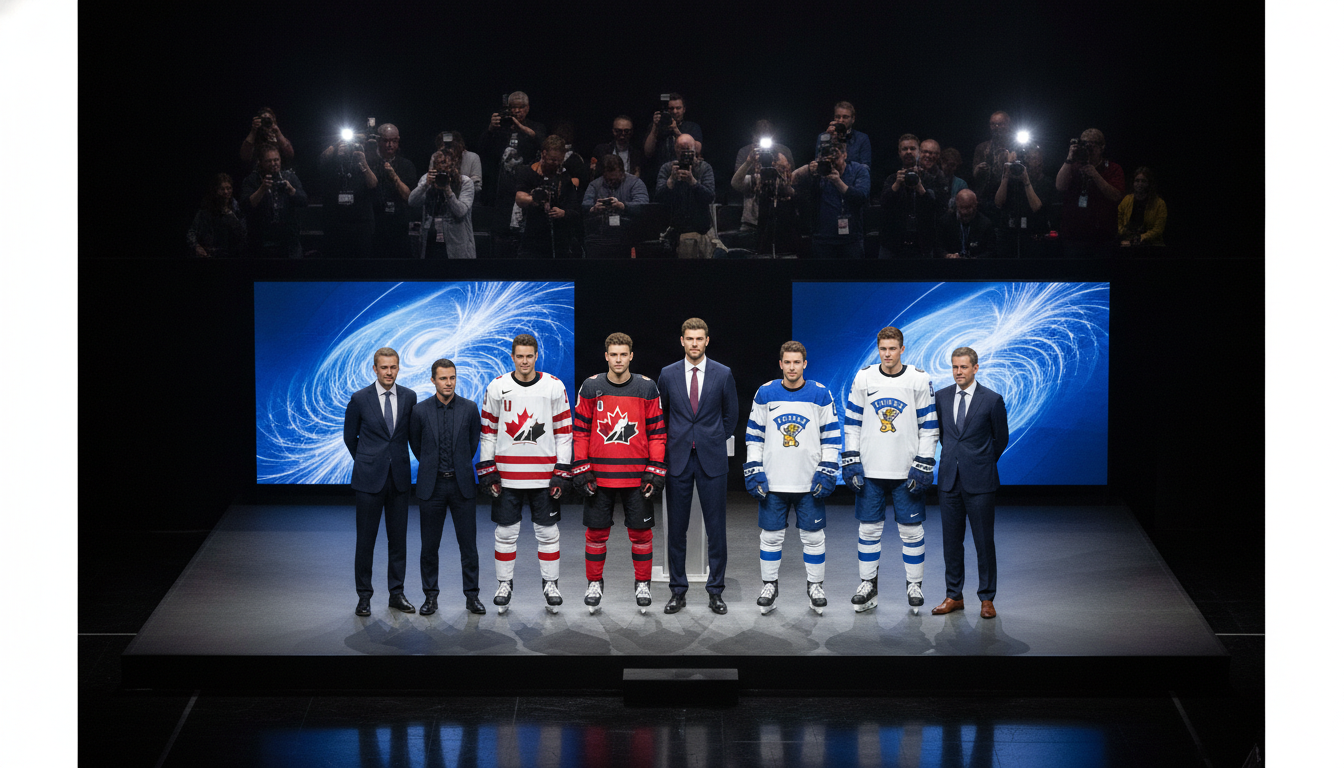
Which Teams Could Make the Biggest Leap at the 2028 World Cup of Hockey
Which nations can climb at the 2028 World Cup of Hockey? Nation-by-nation forecast of teams primed to improve, weighing injuries, NHL form and prospects.
The return of best-on-best international hockey culminates in the 2028 World Cup of Hockey in February 2028, and several nations enter that event positioned to make meaningful gains. This analysis assesses likely participants — Canada, the United States, Sweden, Finland, Switzerland, Czechia, Slovakia and Germany — and ranks their upside based on injuries at the 2026 Olympics, emerging NHL talent and probable career arcs. The piece focuses on realistic improvement rather than a power ranking, identifying where roster changes and player development could move the needle by the next tournament.
Sweden’s centre and goalie upgrades could transform fortunes
Leo Carlsson’s absence in 2026 left a conspicuous void for Sweden, and his health and form will be central to any Swedish leap in February 2028. If Carlsson develops into the two-way, top-line centre many projected, his size and playmaking could unlock higher scoring lines and ease pressure on aging veterans.
Jesper Wallstedt also projects as a potential game-changer in goal if his progression continues into his mid-20s before the World Cup. Additions such as Simon Edvinsson and Ivar Stenberg — along with returning veterans — give Sweden the pieces to offset an aging forward core and mount a deeper tournament run.
Canada’s blue-line prospects and depth could swing outcomes
Canada’s 2026 campaign was hampered by injuries to key forwards and defenders, leaving room for an upgrade by 2028 if health and emergence align. The possible arrival of Matthew Schaefer as a top-pairing defender alongside established stars could fortify a Canadian blueline that lacked its usual dominance in Italy.
Offensively, youth such as Macklin Celebrini and the steady presence of Connor McDavid and Nathan MacKinnon should keep Canada elite, but goaltending remains an open question. Jordan Binnington offered stability in recent February events, yet the team will be watching for younger netminders and clearer No. 1 options ahead of the World Cup.
Finland’s ceiling depends on Aleksander Barkov’s return
Finland’s shortfall in 2026 was felt most keenly without Aleksander Barkov, and his presence for the 2028 World Cup of Hockey would materially raise Finland’s ceiling. Barkov’s two-way leadership and ability to protect leads could have changed the trajectory of Finland’s knockout games and will be a focal point of their recovery.
Beyond Barkov, Finland lacks a deep pipeline ready to produce multiple difference-makers by February 2028, making the team’s prospects hinge largely on core veterans elevating their play. Anton Lundell stands as a candidate to step into a larger role and help stabilize centre depth if his scoring profile grows in the next two seasons.
United States likely to stay elite but face selection decisions
Team USA arrives at 2028 with the smallest need to improve after winning gold in 2026, though personnel choices may alter the squad’s profile. The Americans must decide how long to rely on veteran role players such as Vincent Trocheck or pivot toward younger stars like Logan Cooley and Jason Robertson to refresh scoring options.
Goaltending depth is a potential storyline, with Jeremy Swayman poised to step into a top role should Connor Hellebuyck’s form slip. Given a deep talent pool and a gold-medal benchmark, the U.S. is more likely to refine rather than radically improve its standing at the next World Cup.
Czechia’s goaltending momentum could unlock higher finishes
Czechia’s strength traditionally comes through elite scoring wings and improving crease options, and momentum in goal could be decisive for a deeper showing in 2028. Jakub Dobes’ postseason breakout and the steady development of Lukas Dostal suggest Czechia could field stronger, more reliable goaltending than it did in recent tournaments.
With David Pastrnak and Martin Necas still in their prime by 2028, the Czechs possess the offensive firepower to capitalize if their netminding holds up. Continued junior success signals sustained talent flow, but the extent of Czechia’s leap will depend on converting prospect potential into NHL-ready impact players.
Switzerland, Slovakia and Germany offer steady threats and targeted upside
Switzerland remains a consistent force but will need youth such as Lian Bichsel and Akira Schmid to take tangible steps to move into a higher tier by February 2028. The Swiss suffered in-tournament losses to injury in 2026 and will aim for healthier rosters and incremental defensive gains to reach the semifinals consistently.
Slovakia’s momentum comes from a growing draft presence and established international performers like Juraj Slafkovsky and Simon Nemec, who can drive surprise results if their NHL roles expand. Germany leans on stalwarts such as Leon Draisaitl and Moritz Seider, and a breakout offensive season from JJ Peterka would give the Germans more top-end scoring to pair with elite defense.
Looking to the World Cup, each of these nations presents a different path to improvement: some require the return of missing stars, others need prospect development and a few must simply avoid injuries that derailed previous campaigns.
The 2028 World Cup of Hockey will test how national programs convert injuries, developmental windows and NHL form into tournament outcomes. Eight teams expected to compete will enter with varying upside and constraints, making February 2028 a compelling measure of which countries turned promise into performance on hockey’s biggest stage.
