
Hurricane Lala grazes Hawaii’s Big Island, weakens to tropical storm
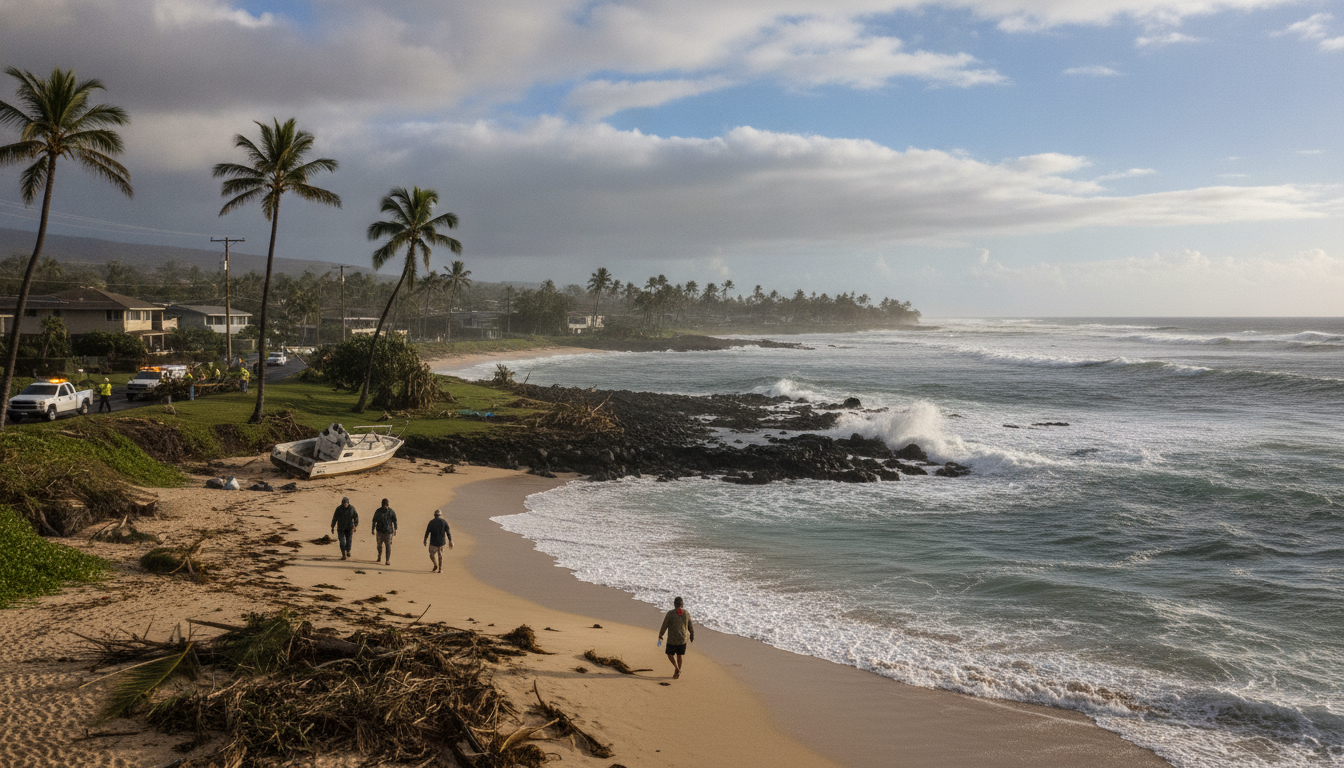
Hurricane Lala grazed Hawaii’s Big Island, weakening to a tropical storm and bringing heavy rain, power outages and coastal damage across the Hawaiian islands.
Hurricane Lala skimmed south of the Big Island on Aug. 16, 2026, edging past populated areas without making a direct landfall while still delivering destructive weather. The U.S. National Hurricane Center said the system had been downgraded from Category 1 to a tropical storm, but warned of continuing hurricane-force gusts in exposed coastal areas. Emergency services remained on high alert as the storm pushed westward across the state, maintaining a threat of flash floods and severe wind damage.
Storm skirts Big Island, downgrades to tropical storm
The National Hurricane Center issued a hurricane warning for the Big Island before the storm passed, a rare advisory given the island’s long absence of direct hurricane landfalls. Forecasters emphasised that a downgrade in classification did not eliminate danger, noting that the circulation remained capable of producing damaging gusts and hazardous seas.
Residents and officials said the storm’s track — close enough to deliver battering surf and squalls but far enough to avoid a core strike — reduced the worst-case scenario, but did not spare communities from significant impacts. Coastal erosion and pounding waves were reported along several shorelines as the system moved westward.
Rainfall threatens windward slopes and flash floods
Meteorologists warned of torrential rainfall concentrated on windward slopes, with the NHC advising that totals could reach as much as 90 centimetres in localized areas. Higher elevations were forecast to see up to one metre of rain, conditions that could rapidly swell streams and rivers and trigger life-threatening mudslides.
Authorities urged residents in low-lying and drainage-prone areas to heed evacuation orders and avoid travel when possible, as sudden flooding can isolate communities and damage infrastructure. The combination of saturated soils and steep terrain on the Big Island made some routes particularly vulnerable to washouts.
Power outages and hospitals on generators
Power utilities reported more than 60,000 households without electricity as strong gusts and falling debris knocked down lines and damaged equipment. Repair crews were deployed where it was safe to work, but officials warned that restoration would take time in remote areas and where access was hindered by standing water and road damage.
Governor Josh Green said three hospitals had switched to generator power while staff ensured critical services continued to operate. Local emergency management teams coordinated deliveries of fuel and supplies to medical facilities and shelters to sustain operations during outages.
Casualty and property damage reported on Big Island
Local authorities confirmed at least one fatality in the South Point area when a vehicle was involved in a weather-related crash during the storm. Officials also reported extensive property damage, including at least 19 roofs lost across the island in what emergency officials described as an “enormous storm.”
Homes along exposed shorelines experienced wave-driven damage and coastal roads saw significant erosion, complicating initial damage assessments. A resident in Waimea, Christine Matsuda, told the Associated Press that “big gusts every few minutes rattle the whole house,” underscoring how continuous winds contributed to both fear and damage.
Tropical storm warnings remain across multiple islands
Tropical storm warnings were active for Maui, Molokai, Lanai, Kahoolawe, Oahu, Kauai and Niihau as the system’s outer bands continued to lash the state. Officials cautioned that while the main circulation had passed to the south of the Big Island, dangerous surf, high surf-driven currents and localized flooding would persist through the day.
The westward-moving storm kept emergency services busy across the archipelago, with coastal communities bracing for continued erosion and inland areas preparing for flash flooding. Authorities also noted the paradox that while rain reduces wildfire risk in the short term, strong gusts and downed power lines can create new hazards that may spark fires once fuels dry.
The islands’ emergency management agencies urged residents and visitors to monitor local forecasts, obey evacuation notices and stay off roads where conditions are hazardous. Utility companies, health systems and municipal crews continued assessments and early recovery work as conditions slowly improved and the storm moved away from the archipelago.
