
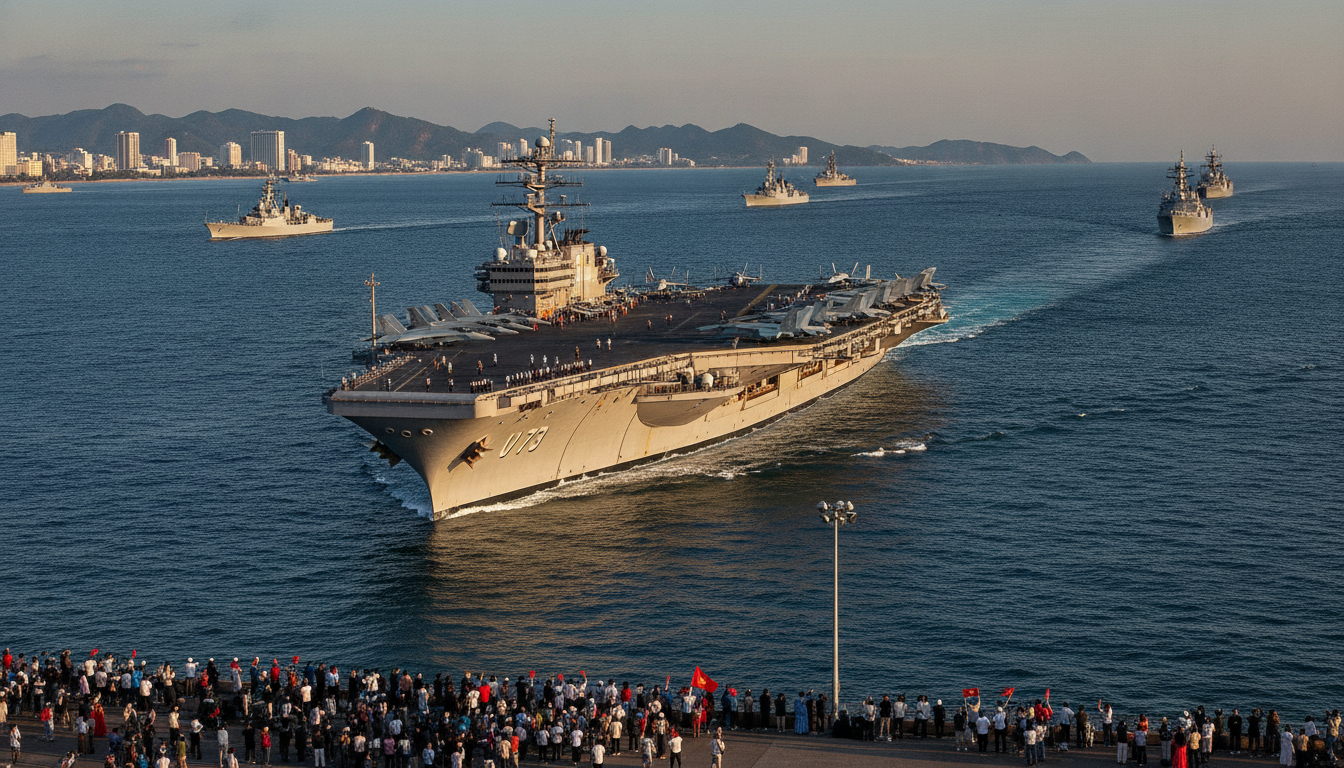
USS George Washington Departs Da Nang as Navy Signals Possible Relief for USS Abraham Lincoln
USS George Washington leaves Da Nang bound for potential Middle East deployment amid reports of strained conditions aboard the USS Abraham Lincoln.
The USS George Washington began departing Da Nang, Vietnam, on Saturday, setting course for an anticipated deployment to the Middle East, according to naval movements observed from the port. The move comes as reports of supply shortages and mental-health strains have dogged the USS Abraham Lincoln during an extended mission, making the carrier changeover a focal point for U.S. naval readiness. The Navy has not formally confirmed that the George Washington will replace the Lincoln, citing routine operational security.
USS George Washington Departs Da Nang
The Nimitz-class carrier USS George Washington left the western Pacific port of Da Nang this weekend after a port call that drew international attention. Naval officials typically withhold detailed movement information for carriers, but the ship’s departure was visible to local observers and naval monitors. If redeployed to the Middle East, the George Washington would extend U.S. carrier presence in a theater that has seen heightened maritime tensions.
Reports of Conditions Aboard USS Abraham Lincoln
The USS Abraham Lincoln has been operating without a port visit for an unusually long period, and multiple media reports describe supply and morale challenges among the roughly 5,000 sailors and Marines aboard. Accounts circulating in U.S. outlets cited incidents of sailors attempting to jump overboard and described shortages of hygiene items, diminished food variety and issues with plumbing and waste disposal. Senior officials, including the acting secretary of the Navy, have acknowledged isolated mental-health cases while disputing characterizations that conditions were catastrophic.
Extended Deployment and Operational Strain
The Lincoln’s deployment, which began from San Diego last November, was initially scheduled to conclude in May but was extended amid escalating regional operations after U.S. and allied military actions in February. That prolonged deployment — reported to have stretched beyond 266 days without a port call — has prompted questions from lawmakers and analysts about force rotation and the sustainment of carrier strike groups. Pentagon officials have said they are adjusting logistics where possible, and presidential and defense leaders have indicated plans to rotate ships when operationally feasible.
Strategic Impact in the Western Pacific
Analysts warn the George Washington’s exit from the western Pacific would temporarily leave the region without a forward-deployed U.S. carrier, raising concerns among allies about deterrence posture. Former naval officers and strategic analysts say the visible presence of a carrier can shape regional perceptions and reassure partners in the Philippines, Japan and Indonesia. While most experts do not predict immediate aggressive action by regional powers, they say the absence of a carrier reduces the U.S. Navy’s ability to project power and respond rapidly to contingencies in the Indo-Pacific.
Logistics, Resupply and War-Time Constraints
Officials point to disruptions in normal resupply and maintenance chains as a key factor complicating carrier operations, particularly when nearby bases and support facilities are affected by hostile actions or regional tensions. Iranian attacks on forward facilities and maritime assets have been cited as contributors to changes in routine replenishment plans for carriers operating in the Middle East. Such constraints can force adjustments to meal plans, spare parts flow and scheduled maintenance, placing additional strain on crews already enduring lengthy deployments.
Decision and Message from Washington
White House and Pentagon statements in recent days have sought to balance reassurance with acknowledgment of strain, emphasizing the professionalism of service members while noting efforts to rotate forces. The Pentagon typically refrains from detailing carrier movements, but senior officials have said rotations will occur as operational conditions permit. For U.S. political leaders, the priority cited publicly is ensuring sailors and marines receive necessary care and that fleet readiness is preserved.
The possible redeployment of the USS George Washington underscores the competing demands facing the U.S. Navy: sustaining operations in the Middle East while maintaining a credible presence in the Indo-Pacific. As the Navy moves ships and rebalances assets, allies and adversaries alike will be watching how quickly carriers can be cycled, replenished and returned to their patrol stations.
