
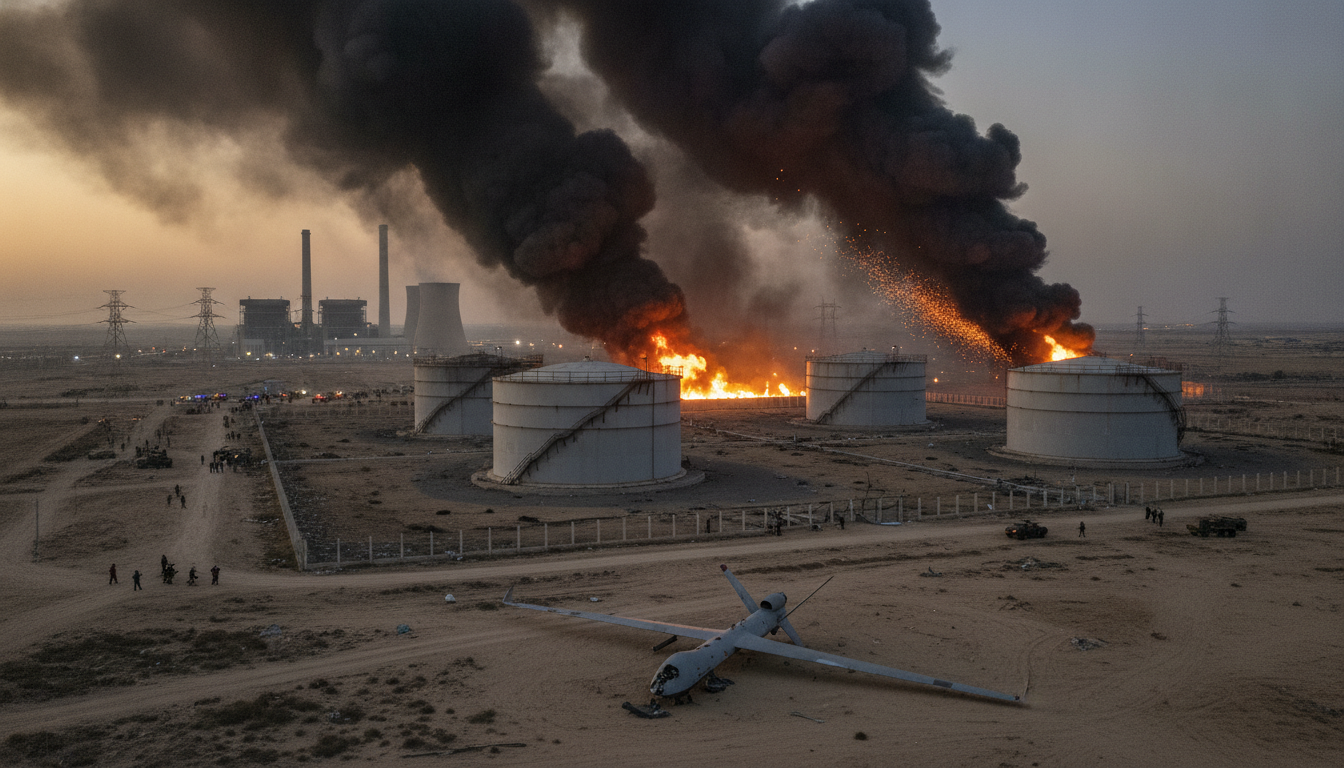
Drone strikes on Az Zawiya deepen Libya energy crisis
Repeated drone strikes on Az Zawiya’s oil and power infrastructure are exacerbating Libya’s energy crisis, threatening fuel supplies and widening power cuts across the country.
Drone strikes target Az Zawiya energy infrastructure
Repeated drone attacks have struck oil storage, pipelines and power installations around the coastal city of Az Zawiya, security sources and local officials said. The strikes, reported throughout early August 2026, have focused on facilities that feed both domestic markets and export lines. Az Zawiya’s strategic position west of Tripoli makes it a focal point for forces seeking control of fuel depots and transmission hubs.
Journalists on the ground and energy-sector observers describe a pattern of precision strikes that aim to deny access rather than cause mass casualties. Damage assessments are still being compiled, but engineers and local managers warn that outages at key sites will take days to weeks to repair. The attacks have intensified competition between rival armed groups vying for control of the area.
Damage to fuel storage and refining capacity
Operators at storage terminals reported fires and ruptured tanks after drone hits, raising immediate concerns about fuel availability and contamination. Even limited damage to tanks or pipelines can interrupt refinery throughput and force rationing of petrol and diesel for civilian and commercial use. Local suppliers have begun limiting wholesale deliveries to prioritize essential services.
Refinery technicians say restarting damaged units requires safety checks, replacement parts and secure access to sites, all of which are complicated by ongoing clashes. Insurance and logistics firms have signalled higher operational costs and delays for shipments, with some maritime insurers reviewing coverage for tankers loading from nearby terminals. The cumulative effect threatens Libya’s already fragile fuel distribution network.
Widespread power outages and public services strain
Power cuts have spread beyond Az Zawiya, with large parts of Tripoli and adjacent districts experiencing rolling blackouts as generation and transmission infrastructure are hit. Hospitals and water-pumping stations have shifted to backup generators, but fuel shortages and intermittent supplies are undermining those contingency measures. Citizens report longer periods without electricity, which is affecting refrigeration, healthcare and small businesses.
Electricity authorities warned that damage to transmission lines and substations could prolong outages until repairs are secured and the security situation stabilizes. Repair crews face the dual challenge of working under risk of renewed strikes and negotiating access with local commanders. The result is a growing humanitarian strain, particularly for vulnerable households and critical care facilities.
Rival groups compete for control of Az Zawiya
Analysts say the violence around Az Zawiya is tied to a broader struggle among armed factions to secure strategic economic assets. Control of fuel depots and power nodes provides not only military leverage but also revenue streams that can finance fighters and local administrations. Sources familiar with the fighting say small, highly mobile units have been using drones to strike assets held by opposing groups.
The tactical use of drones reflects a shift in the conflict’s dynamics, enabling actors to target infrastructure from a distance while avoiding large troop movements. That increases the risk that critical installations will be repeatedly hit, even where frontline lines are fluid. Civilians, meanwhile, bear the immediate consequences through shortages and service disruptions.
Economic toll and risks to national revenues
Libya’s economy remains heavily dependent on oil revenues, and interruptions to refining and export activity will hit state finances and local economies. Reduced fuel availability drives up prices in informal markets and increases operating costs for transport and agriculture. Business owners report mounting losses as generators, cold chains and transport networks become unreliable.
Export disruptions also carry wider market implications if shipments from nearby terminals are delayed or cancelled for an extended period. While global oil markets today are diversified, analysts caution that prolonged instability could complicate Libya’s ability to finance imports and public services. Recovery costs for damaged infrastructure are expected to be substantial.
Calls for ceasefire and international concern
Local civic groups, humanitarian agencies and some diplomatic missions have urged an immediate halt to strikes on civilian infrastructure and safe access for repair teams. Aid organizations emphasize that restoring power and fuel supplies is essential to prevent a deeper humanitarian emergency. International calls also stress that attacks on energy infrastructure are likely to prolong conflict and impede reconciliation efforts.
Diplomats and regional policymakers have expressed concern about escalation, warning that continued strikes could draw in outside actors and further destabilize supply lines. Several countries have offered technical assistance for damage assessment and repair if security conditions permit. For now, appeals for restraint compete with tactical objectives on the ground.
The strikes around Az Zawiya have pushed Libya into a sharper energy emergency, with immediate effects on fuel availability, power stability and everyday life for civilians. Repairs and a return to reliable services will depend on both technical fixes and progress toward reducing hostilities.
