
Lebanon amnesty law approved by parliament, set to reduce sentences for thousands
Lebanon’s amnesty law approved Aug 12, 2026; parliament’s vote reduces many sentences, abolishes death penalty and aims to relieve severe prison overcrowding.
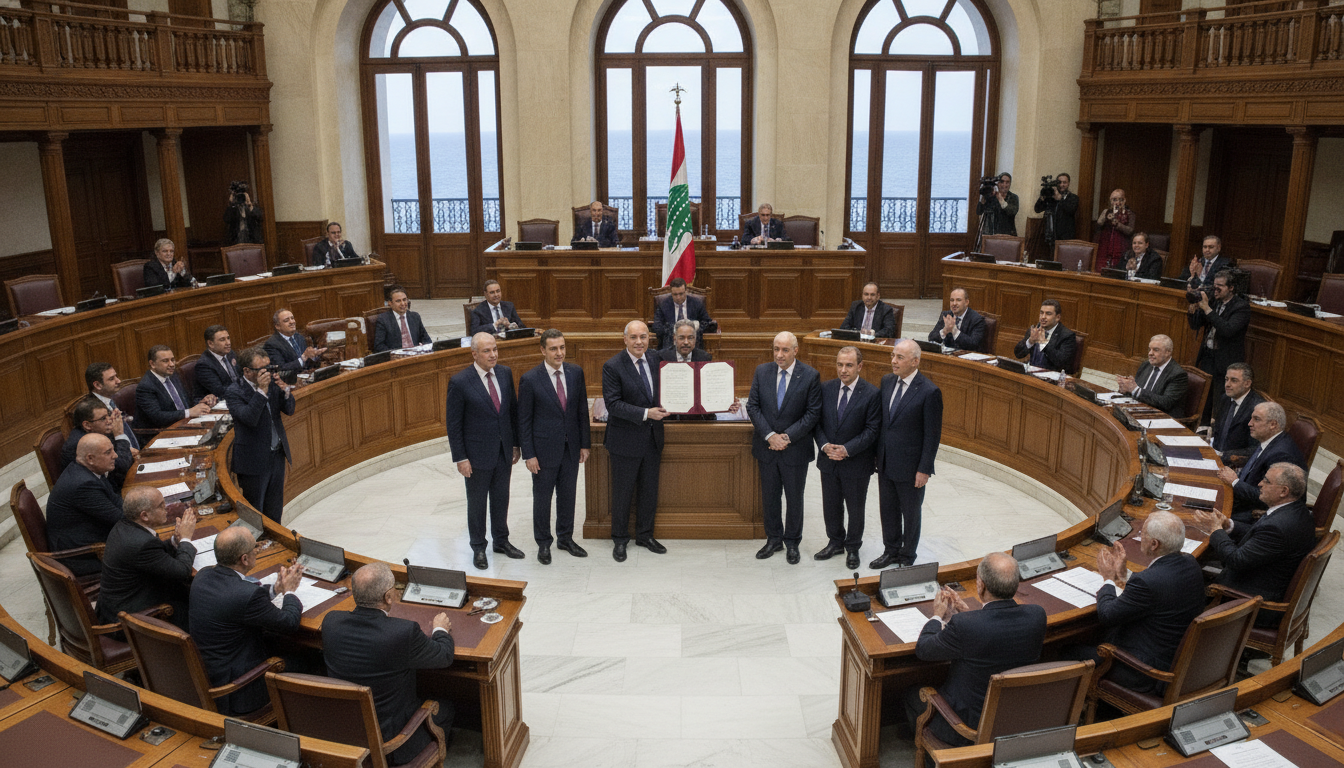
Lebanon’s amnesty law was approved by parliament on August 12, 2026, in a show-of-hands vote that lawmakers and officials say will shorten sentences for thousands of detainees and wanted people.
The bill, the first general amnesty of its kind since 1991, comes a day after lawmakers formally abolished the death penalty, and supporters frame it as a response to extreme prison overcrowding and prolonged pretrial detention.
Parliament approves amnesty law in show-of-hands vote
The measure passed Wednesday in a non-secret roll call described by Lebanon’s official news agency and acknowledged by the parliament speaker’s office.
Officials have said the package will “exceptionally” reduce certain prison terms, but the government has not yet published a full tally of how many people will be released or have sentences shortened.
Key provisions and sentence calculations
Under the new law, penalties that previously carried death or life sentences are reduced to a maximum of 17 “prison years,” a term the legislation uses as its baseline.
Lebanese penal practice counts a prison year as nine months for crediting time served, which converts 17 prison years into 12 years and nine months of actual imprisonment under current calculation rules.
Release criteria and detained cases
The legislation explicitly provides for the release of people who have been held in pretrial detention for more than 12 prison years without formal charges, offering relief to a group long cited by rights advocates.
Lawmakers also set conditions for reduced sentences that vary by offence, and detailed implementing regulations are expected from justice authorities in the coming weeks.
Who stands to benefit from the amnesty
Supporters say the law will affect a wide cross-section of detainees, including those detained over incidents linked to the Syrian conflict and others convicted on drug or theft charges.
Communities in Tripoli, the Baalbek-Hermel region and other areas that have long lobbied for clemency are among those likely to see a notable impact if the law is implemented as drafted.
Family members and security critics raise objections
Relatives of soldiers and service members killed in attacks have voiced concern the law could grant undue leniency to perpetrators, and several advocacy groups warned of potential public safety implications.
Opponents have urged authorities to ensure that perpetrators of serious attacks and those tied to organized violence are excluded or handled through stringent review processes.
Prison overcrowding and human rights context
Human rights bodies have long highlighted critical overcrowding in Lebanese detention facilities, noting high pretrial detention rates and limited capacity.
A 2025 report from the National Human Rights Commission cited an overcrowding rate near 300 percent and recorded at least 6,268 inmates in custody by the end of March that year, figures that helped shape parliamentary arguments for relief measures.
Political calculations and regional pressures
The drive for amnesty was amplified by shifts in the region and domestic political pressures, with several factions pressing for measures to benefit their constituencies.
Hezbollah and allied parties pushed for clemency for supporters, while Christian parties sought provisions for families of individuals who had fled to Israel after 2000, illustrating the varied political interests behind the vote.
Implementation will fall to judicial and correctional authorities, who must translate the law’s provisions into case reviews and release orders, a process that legal experts say could take weeks or months.
Officials have signalled a phased approach, prioritizing long-held pretrial detainees and those who meet clear eligibility criteria while reserving the right to exclude cases involving ongoing serious-security investigations.
The law marks a significant legislative shift for Lebanon at a time of intense domestic strain over economic hardship, weak state institutions and persistent political fragmentation.
Parliamentarians who supported the measure framed it as an act of national reconciliation and practical necessity, while critics warned of potential risks if procedural safeguards are not robustly enforced.
Observers will watch how quickly justice authorities produce implementing guidelines and release statistics, because the social and security impact will depend heavily on execution rather than the provisions alone.
For families of detainees and for victims awaiting redress, the coming weeks may determine whether the law brings urgent relief or renewed controversy over accountability and public safety.
The passage of the amnesty law on August 12, 2026, represents a major legal and political development for Lebanon, but its ultimate effect will hinge on transparent implementation, clear exclusions for serious offenses and careful judicial review to balance clemency with victims’ rights.
