
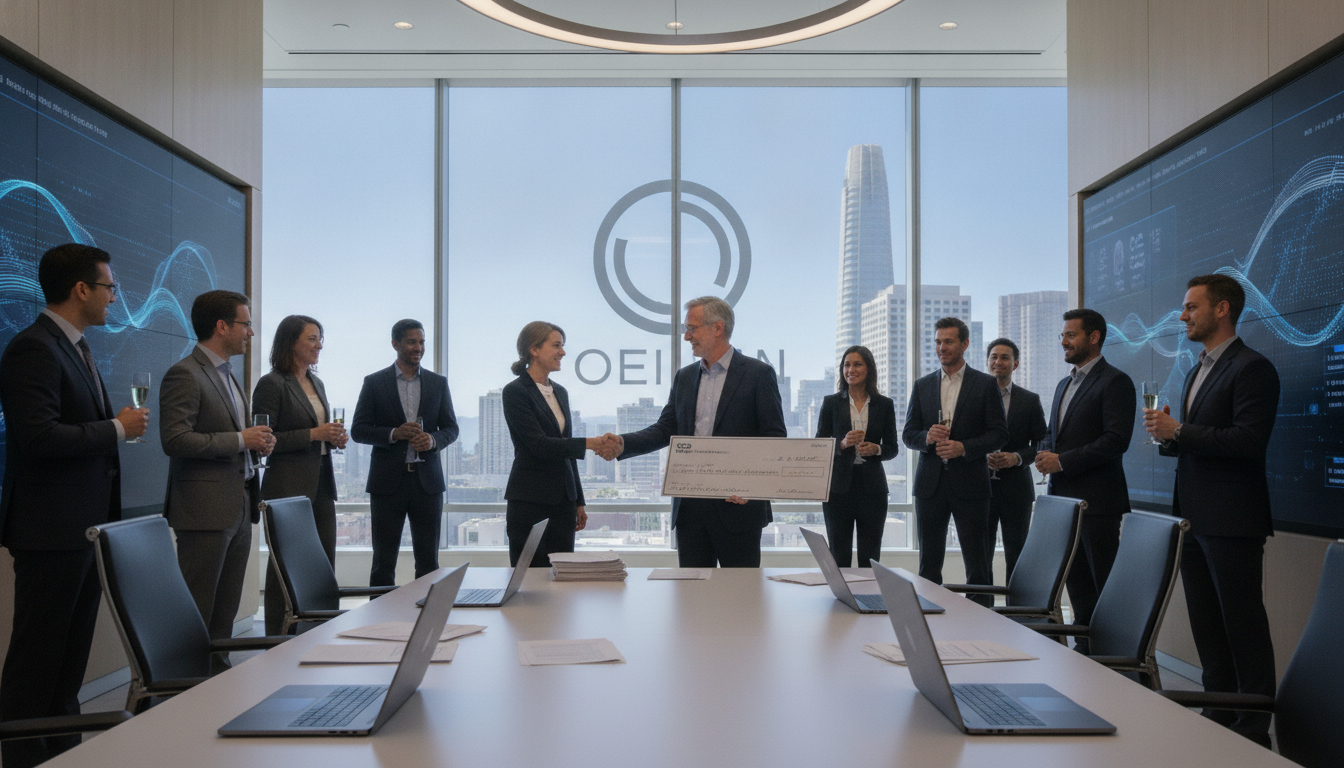
OpenAI buyback: company repurchases $7 billion in employee shares at $852 billion valuation
OpenAI completes a $7 billion buyback of employee shares at an $852 billion valuation, offering liquidity while delaying an IPO as it refocuses on enterprise.
OpenAI announced a private tender offer that repurchased roughly $7 billion of employee-held shares, a move aimed at providing liquidity to its workforce without going public. The OpenAI buyback values the company at $852 billion, matching the valuation set in its March 2026 fundraising round. Company officials did not respond to requests for comment by publication time.
OpenAI Executes $7 Billion Tender Offer
The buyback was carried out through a private tender process that allowed selected employees to sell portions of their equity back to the company. Bloomberg reported details of the transaction, which is designed to give staff financial flexibility while the company remains privately held. Industry experts say such tenders are increasingly common among large private technology firms that want to manage talent retention without an immediate IPO.
The move avoids the market scrutiny and disclosure requirements of a public listing while still returning cash to employees who have accrued significant paper gains through stock compensation. For many employees, the tender offers a way to diversify personal finances without the complexities and timing pressures of a public offering.
Valuation Mirrors March Fundraising at $852 Billion
The $852 billion valuation used in the buyback equals the figure established in OpenAI’s March 2026 fundraising round, which raised roughly $122 billion in new capital. That March transaction expanded the company’s financial resources and reinforced investor confidence in its long-term strategy. By applying the same valuation to the buyback, OpenAI signaled continuity in its internal pricing and investor expectations.
Maintaining that valuation in a secondary sale helps stabilize employee perceptions of equity value and reduces the potential for internal discord over shifting company worth. It also underscores the company’s continued access to substantial private capital despite broader market uncertainties.
SEC Filing Leaves IPO Timing Unclear
OpenAI filed confidentially with the U.S. Securities and Exchange Commission in June 2026 as a preparatory step toward a potential initial public offering, but the recent tender suggests a public debut may not be imminent. Confidential filings are often preliminary and do not commit a company to a specific timetable for listing on public markets. Analysts caution that private liquidity programs can indicate either tactical preparation ahead of an IPO or a preference to remain private while refining business metrics.
Public companies typically seek to present strong recent quarters before launching an IPO, and reports earlier this year indicated OpenAI missed some internal revenue and user-growth targets. Those misses, coupled with strategic adjustments, may prompt management and investors to delay a public offering until performance trends strengthen.
Employee Liquidity Strategy Without a Public Market
Company insiders described the tender as a way to relieve pressure on employees who received large equity grants during rapid growth phases. Startups and pre-IPO companies frequently deploy buybacks, tender offers, or secondary transactions to provide targeted liquidity to employees, particularly when public market conditions are volatile. For OpenAI, the buyback offers a controlled means to balance retention incentives against the needs of staff members seeking to realize gains.
By handling liquidity internally, the company can set participation terms, valuation parameters, and eligibility windows that align with its operational priorities. The approach also reduces the risk of large volumes of stock reaching public markets, which can complicate pricing and investor perceptions if an IPO follows.
CEO Statements and Internal Performance Context
Chief executive comments earlier this year acknowledged a period of underperformance, but management has signaled confidence about the company’s trajectory. In a public message last month, the CEO conceded that the prior 12 months were not the company’s strongest, while asserting that the coming period is expected to be its best to date. Such stewardship statements aim to reassure investors, employees, and partners as the company pivots strategy and execution.
The Wall Street Journal reported in April 2026 that OpenAI missed certain internal financial and user targets, a disclosure that likely factored into decisions about timing for a public offering. Company leadership appears to be emphasizing a tighter focus on enterprise sales and higher-margin products as part of efforts to improve near-term results.
Competitive Dynamics with Anthropic and Market Positioning
The rise of competitors, including Anthropic, has intensified pressure on OpenAI to fine-tune its commercial approach before entering public markets. Reports that Anthropic reached profitability earlier in 2026 have heightened expectations that market investors will compare the two firms closely. OpenAI’s decision to pare back experimental bets in favor of enterprise solutions may reflect a desire to present a clearer, more durable revenue story to prospective public investors.
Investors will likely watch whether the company’s enterprise push accelerates recurring revenue and margin expansion, factors that could materially influence IPO timing and valuation prospects.
OpenAI’s $7 billion buyback provides immediate financial relief for employees while underscoring the company’s preference for a measured approach to public markets. Whether the tender represents a bridge to a near-term IPO or a longer-term decision to stay private will depend on forthcoming financial performance and competitive dynamics through the remainder of 2026.
