
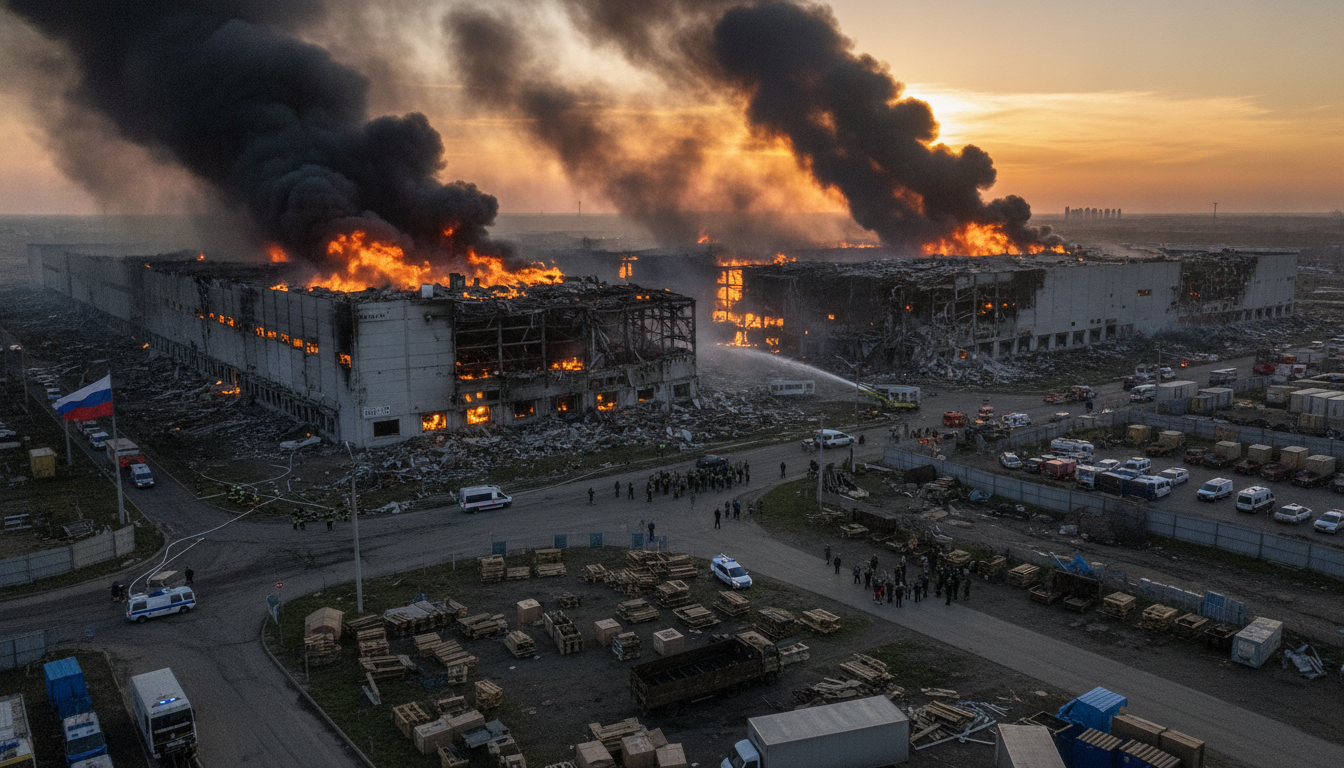
Ukrainian drones strike 23 Wildberries warehouses in Russia, killing nine
Ukrainian drone strikes have hit 23 Wildberries warehouses across Russia, killing nine employees and forcing multiple facilities to suspend operations in a campaign targeting the retailer’s logistics network.
Ukrainian drones strike 23 Wildberries warehouses
In under three weeks Ukrainian unmanned aircraft reportedly struck 23 Wildberries warehouses in different regions of Russia, according to military and local accounts. The attacks have prompted temporary shutdowns at several distribution sites and raised questions about the vulnerability of civilian e-commerce infrastructure in wartime.
Local officials and company sources say the strikes have disrupted parcel flows and forced a rapid reassessment of how goods move through Wildberries’ nationwide network. The company’s prominence in Russia’s retail system means any sustained disruption has wider commercial and social consequences.
Casualties, injuries and halted operations
Authorities report that nine Wildberries employees were killed and dozens more were wounded in the strikes, with some warehouses ceasing activity entirely. Emergency services and law enforcement have been involved at multiple scenes, and investigations into individual incidents are continuing.
Beyond the human toll, damage to storage and processing facilities has immediately reduced the company’s capacity to receive, store and dispatch merchandise. Several pickup points and local hubs have temporarily stopped accepting packages while repairs and safety assessments take place.
Ukrainian rationale for targeting Wildberries warehouses
Ukrainian officials have said the operations aim to degrade logistics that indirectly support Russian military personnel, arguing that soldiers often procure non-lethal equipment through popular commercial platforms. Items such as tactical clothing and field gear — available openly on retail sites — have been cited by Kyiv as part of the justification for selecting logistics targets.
Ukrainian commanders framed the strikes as a way to undermine a sense of normalcy in Russia by disrupting services deeply embedded in everyday life. That strategic logic has drawn scrutiny from analysts weighing the military and humanitarian implications of striking commercial supply chains.
Wildberries’ role in Russia’s consumer economy
Wildberries is one of Russia’s largest online marketplaces, serving tens of millions of customers monthly and operating a dense network of pickup points that reach urban and rural communities. Its distribution footprint and fast-delivery reputation have made it an essential part of consumer supply chains across the country.
The platform also functions as a lifeline for a large number of small sellers, many of whom rely on Wildberries’ warehousing and logistics to reach customers they otherwise could not. Analysts warn that repeated damage to warehouses risks a broader economic ripple, particularly for micro and small enterprises.
Impact on sellers and inventory losses
Estimates from market observers suggest up to 100,000 businesses may have lost inventory stored at affected facilities, including many small vendors who use Wildberries as their primary route to market. The immediate losses range from unsold stock to damaged consignments that will likely take months to replace or resell.
Wildberries altered its seller agreement shortly before the first strikes to remove liability for losses caused by terrorist acts or natural disasters, a move that sparked concern among merchants. In response to the damage, the company announced targeted one-off payments aimed at supporting the smallest partners while longer-term compensation and recovery measures are discussed.
Corporate ownership and recent structural changes
Wildberries was founded in the early 2000s by Tatyana Kim and her then-husband, Vyacheslav Bakalchuk, and grew into a dominant retail platform with far-reaching logistics operations. Ownership shifted in high-profile corporate developments: after a publicized divorce in 2024 and a subsequent corporate transaction, a significant stake in the company was allocated to an external advertising group.
That transaction left Kim controlling a majority share while a 35 percent interest was transferred to Russ Outdoor, a move that prompted scrutiny and speculation about additional stakeholders. The company’s financial reporting in recent months has also raised questions among observers about dividend flows and the identities of beneficiaries.
Government and company responses to the disruption
In late July a Russian deputy prime minister convened meetings with federal officials and affected sellers to discuss relief measures and a financial support package. Officials indicated work on a broader aid plan intended to stabilize supply chains and help small businesses recover from losses tied to the strikes.
Wildberries has publicly pledged immediate assistance, reporting deposits intended for tens of thousands of sellers and promising to prioritize the smallest operations. Company spokespeople say they are coordinating site repairs, rerouting logistics where possible and working with authorities to restore services safely.
The strikes on Wildberries warehouses underline the growing intersection of commerce and conflict, as platforms that serve millions of civilians also become focal points in military strategy. As investigations proceed and repair efforts continue, the broader economic and humanitarian consequences for employees, small sellers and consumers will remain a central concern for regulators and market participants alike.
