
Darul Qasim graduates reshape Chicago Muslim leadership amid Gaza tensions
Darul Qasim grads shape Chicago Muslim life, guiding youth through post-October 7 tensions and teaching ‘internal immunity’ in mosques, schools and hospitals.
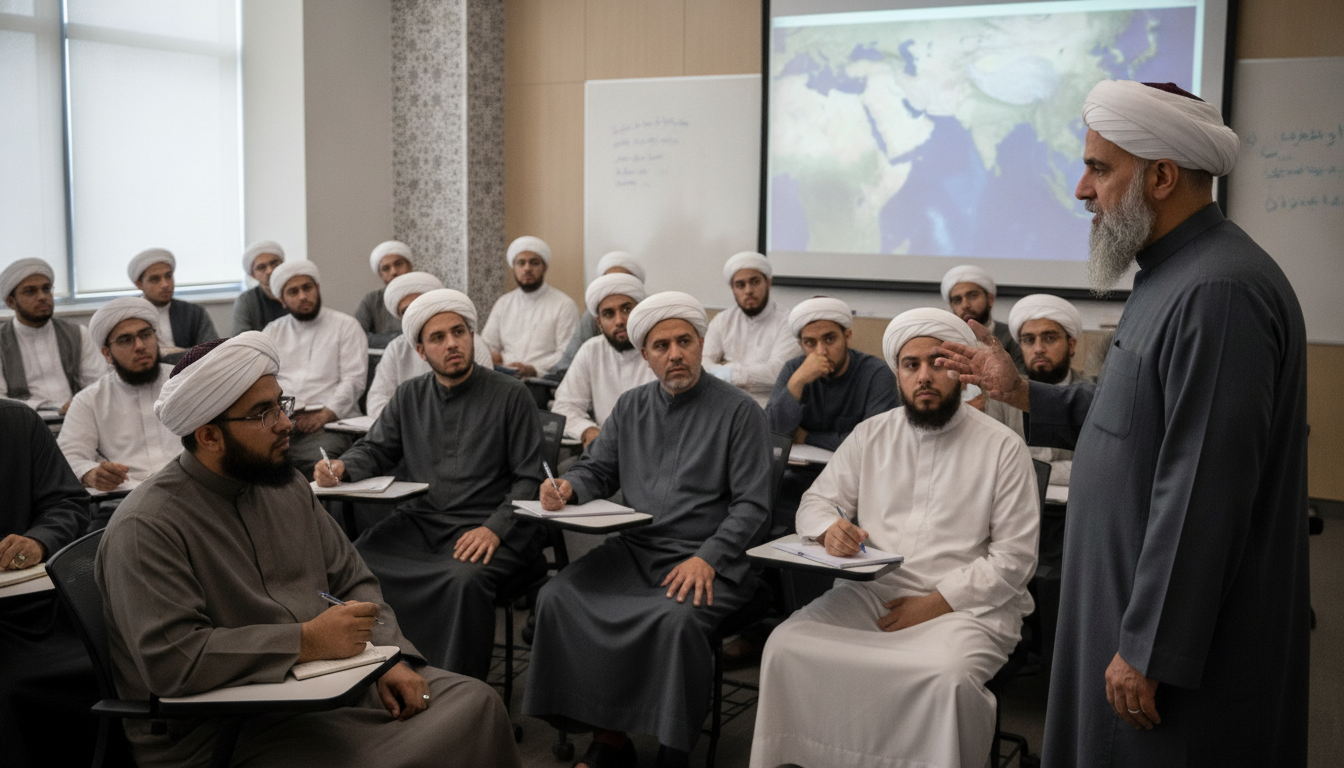
Darul Qasim’s small Islamic seminary has quietly extended its influence across the Chicago area as graduates move into leadership roles in mosques, schools and community institutions. Alumni such as Imam Haroon Ahmed, now director of Islamic affairs at the Islamic Foundation, say the college’s teaching methods have become a resource for congregations navigating the emotional and political fallout after October 7, 2023. Community leaders credit the school with equipping clergy to address theological questions, identity struggles and grief among young Muslims without defaulting to reactionary rhetoric.
Graduates filling leadership roles across institutions
Graduates of Darul Qasim now serve as imams, educators and counsellors in a range of local institutions, from suburban mosques to Islamic day schools. Their presence is especially visible at centers such as Masjid Uthman and Uthman Academy, where former students provide religious instruction and pastoral care alongside formal schooling. These leaders often combine classroom teaching with hands-on community work, attending to everything from Friday sermons to one-on-one conversations after services.
These placements have broadened the seminary’s reach beyond its classrooms, allowing its interpretive approaches to shape congregational life. Administrators at area mosques say they deliberately recruit alumni who can bridge textual scholarship with social needs. The result is a cohort of clergy who are doctrinally trained but practice-oriented, positioned to meet parishioners in moments of crisis.
Addressing youth questions after October 7, 2023
Imam Haroon Ahmed describes a surge in youth seeking answers following the outbreak of the Israel–Gaza conflict on October 7, 2023. Young congregants turned to social media and school conversations for frames about suffering, justice and belonging, presenting mosque leaders with urgent theological and identity questions. Ahmed and other Darul Qasim-trained imams report that many of these encounters required patient moral guidance rather than immediate doctrinal pronouncements.
Clergy say the questions typically circle back to existential themes: why suffering exists, how faith sustains under injustice, and whether religious and national identities can coexist. Rather than offering quick certainties, Darul Qasim graduates aim to slow discussions and locate dilemmas within established schools of thought, encouraging reflective engagement instead of raw emotional reaction.
The concept of ‘internal immunity’ in pastoral care
A key phrase repeated by several leaders is “internal immunity,” a pastoral strategy that seeks resilience without emotional closure. The idea is not to numb congregants to external hostility but to prevent external pressures from defining personal development and faith. Practitioners teach skills of discernment, historical context and ethical reasoning so parishioners can sustain moral agency in polarized moments.
This approach shapes pastoral routines: longer one-on-one conversations after Friday prayers, small study groups, and guided reflections that resist trending narratives. Leaders argue that cultivating this form of resilience reduces impulsive responses and fosters long-term civic participation grounded in ethical principles.
Intellectual lineage and curricular influences
Darul Qasim’s curriculum draws explicitly from historical Islamic reformers, linking contemporary pastoral practice to figures such as Shah Waliullah al-Dihlawi. Faculty and graduates reference that 18th-century emphasis on integrating revelation, law and public welfare as a model for modern application. That intellectual lineage informs how teachers present jurisprudence and ethics as connected to everyday social challenges.
Students at the seminary study classical texts alongside contemporary commentaries, learning to translate dense scholarship into accessible guidance for families, professionals and young people. That pedagogical orientation encourages graduates to operate both as textual scholars and pragmatic community leaders.
From mosques to hospitals: alumni in practical care roles
Graduates like Lateef have taken their training into non-traditional settings such as hospitals and hospice care, accompanying families during end-of-life decisions. Darul Qasim alumni report that their formation helps them address questions that medicine alone cannot settle—questions of meaning, moral limits and communal obligations. These roles often require diplomacy and interdisciplinary understanding, as clergy navigate medical ethics alongside spiritual needs.
Weekly study groups and weekend seminars bring together professionals—doctors, lawyers and teachers—who want to reconcile secular training with religious formation. That network provides a support system for leaders who encounter ethically complex cases in hospitals, schools and courtrooms.
Community resilience and the next generation of leaders
Mosque leaders in the Chicago suburbs say they are seeing early signs that this model strengthens community cohesion, particularly among young adults. By emphasizing reflection and moral reasoning, Darul Qasim-trained imams aim to reduce polarization and sustain civic engagement. Congregational feedback indicates that members appreciate clergy who can address political realities while refusing to let them eclipse spiritual and ethical growth.
The seminary’s alumni network also serves as an informal recruitment and mentoring pipeline, helping new leaders find placements and navigate institutional challenges. As graduates spread into diverse roles, their combined influence is reshaping how Muslim communities in the Chicago area respond to crises and raise the next generation of leaders.
Imam Ahmed and classmates describe their work as steady, sometimes slow, and oriented toward long-term moral formation rather than immediate public visibility. In communities still processing conflicts that reached new intensity after October 7, 2023, that commitment to sustained pastoral care and reflective learning appears to offer a stabilizing presence.
