
DRC Ebola outbreak surpasses 1,700 deaths as WHO accelerates trials for treatments
DRC Ebola outbreak kills 1,707 as WHO speeds trials for treatments and vaccines; response hampered by insecurity, unpaid health workers and funding gaps.
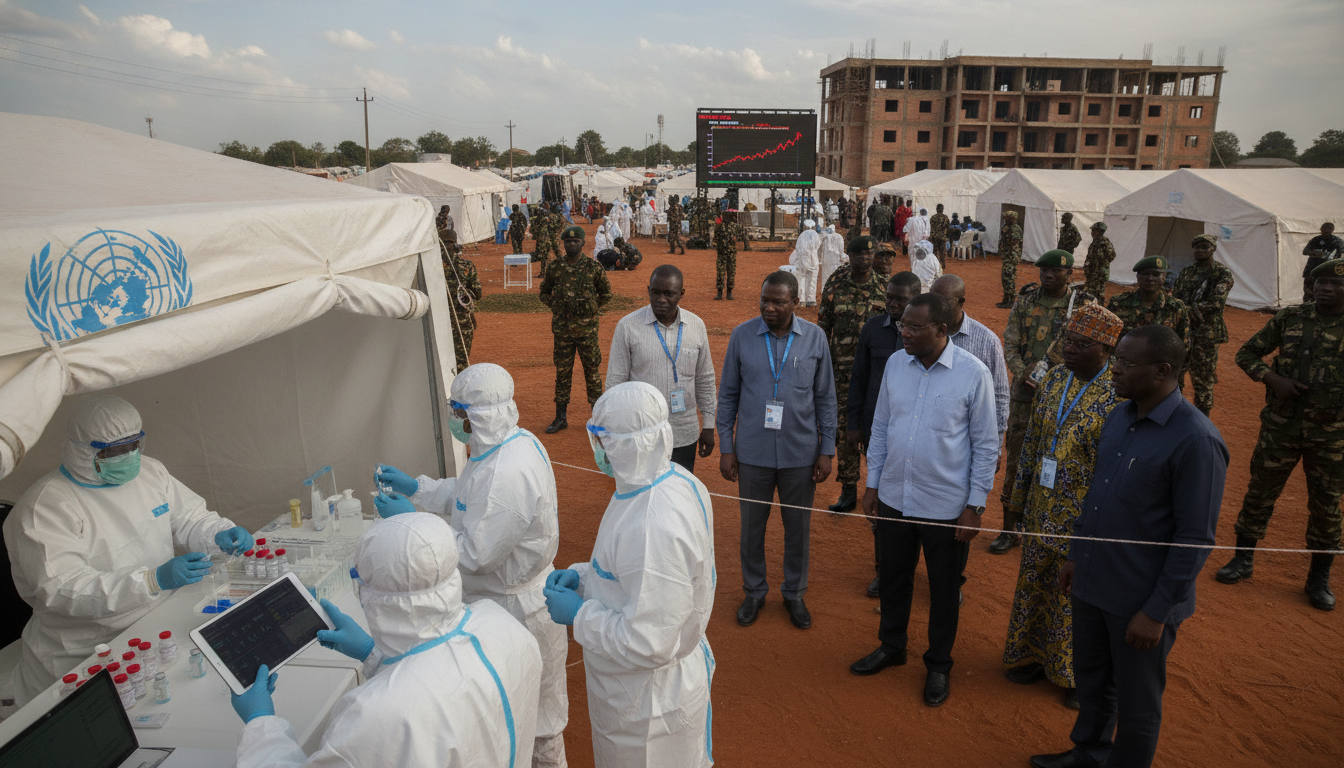
The DRC Ebola outbreak has now claimed more than 1,700 lives, health authorities report, as the World Health Organization moves rapidly to test experimental treatments and vaccines. The outbreak, caused by the rare Bundibugyo strain and declared on May 15, 2026, has recorded 3,802 confirmed and probable cases and remains concentrated in eastern provinces. Officials say intensified clinical research and contact-monitoring efforts are under way even as operational obstacles limit reach and pace.
Death toll and case numbers
Government figures show 1,707 deaths among 3,802 recorded cases since the outbreak was declared on May 15, 2026. More than 17,000 contacts have been identified and are being followed up, with roughly 80 percent of those contacts monitored each day. The epidemic now stands as the second-largest Ebola outbreak on record and is the fastest-growing in recent history.
Clinical trials and vaccine testing
WHO officials said preplanned research frameworks allowed clinical trials of experimental medicines and vaccines to begin far sooner than in previous outbreaks. Vasee Moorthy, acting head of the WHO R&D Blueprint, told reporters that promising preclinical results have encouraged quicker field testing but cautioned that results will depend on rigorous clinical evaluation. International and Congolese researchers are running multiple adaptive trials to assess safety and effectiveness against the Bundibugyo variant.
Geographic concentration in Ituri province
The outbreak remains heavily focused in Ituri province, which accounts for almost 90 percent of reported cases, according to health authorities. Cases have also been confirmed in five other provinces, including the major regional hub of Kisangani, raising concerns about further spread along transport and trade routes. Localized transmission in towns such as Bunia and Mongbwalu continues to drive case increases and demand for rapid containment measures.
Bundibugyo strain raises treatment gaps
Unlike outbreaks caused by Zaire and Sudan strains, the Bundibugyo variant has no licensed vaccines or antiviral therapies approved specifically for it. That gap has driven the urgency behind trialling experimental agents and candidate vaccines adapted to this lineage. Researchers emphasise that laboratory promise does not guarantee real-world effectiveness and that conclusive evidence will depend on the outcome of ongoing randomized studies.
Operational hurdles and security threats
Response teams face persistent operational challenges, including delays in contact tracing, violence by armed groups, and attacks on health facilities that disrupt services and outreach. Access to many affected communities remains limited because of insecurity and local mistrust of authorities, complicating surveillance and safe patient transport. The combination of logistical obstacles and fragile infrastructure has slowed case finding and isolation efforts in hotspot areas.
Impact on health workers and industrial action
More than 100 healthcare workers have been infected since the outbreak began, undermining human resources at facilities already under strain. Frustration over unpaid wages and dangerous working conditions has prompted threats of strikes and periodic walkouts by medical staff in towns such as Mongbwalu and Bunia. Health ministry officials and partner agencies are under pressure to address salary arrears and improve protective measures to sustain the frontline response.
International coordination and funding shortfall
WHO Director-General Tedros Adhanom Ghebreyesus planned visits to Kinshasa and Bunia this week as part of intensified global engagement, and Africa CDC Director-General Jean Kaseya has made repeated trips to the region. Despite diplomatic attention and technical support, responders say the operation faces a significant funding gap after cuts to aid budgets. Donor shortfalls threaten the scale-up of surveillance, laboratory testing, logistics and social mobilisation that are critical to controlling transmission.
The outbreak’s speed has prompted comparisons with the 2014–2016 West Africa epidemic, but experts note important differences in strain, health-system context and the current emphasis on preapproved trial protocols. Meanwhile, neighbouring Uganda declared itself Ebola-free in mid-June after its last patient was discharged, offering a potential model for rapid containment when surveillance and case management functions are sustained.
The coming weeks will be pivotal for both the clinical trials and the field response as teams work to reconcile urgent research timelines with the immediate need to enhance surveillance, secure health facilities and rebuild trust in affected communities. Success will depend on sustained funding, improved security for health workers, and clear evidence from trials about which interventions can be scaled across areas hit by the Bundibugyo variant.
