
Argentina land bill sparks Buenos Aires protests over foreign ownership of rural land
Hundreds protest in Buenos Aires against an Argentina land bill to lift limits on foreign ownership of rural land, prompting Indigenous warnings and debate.
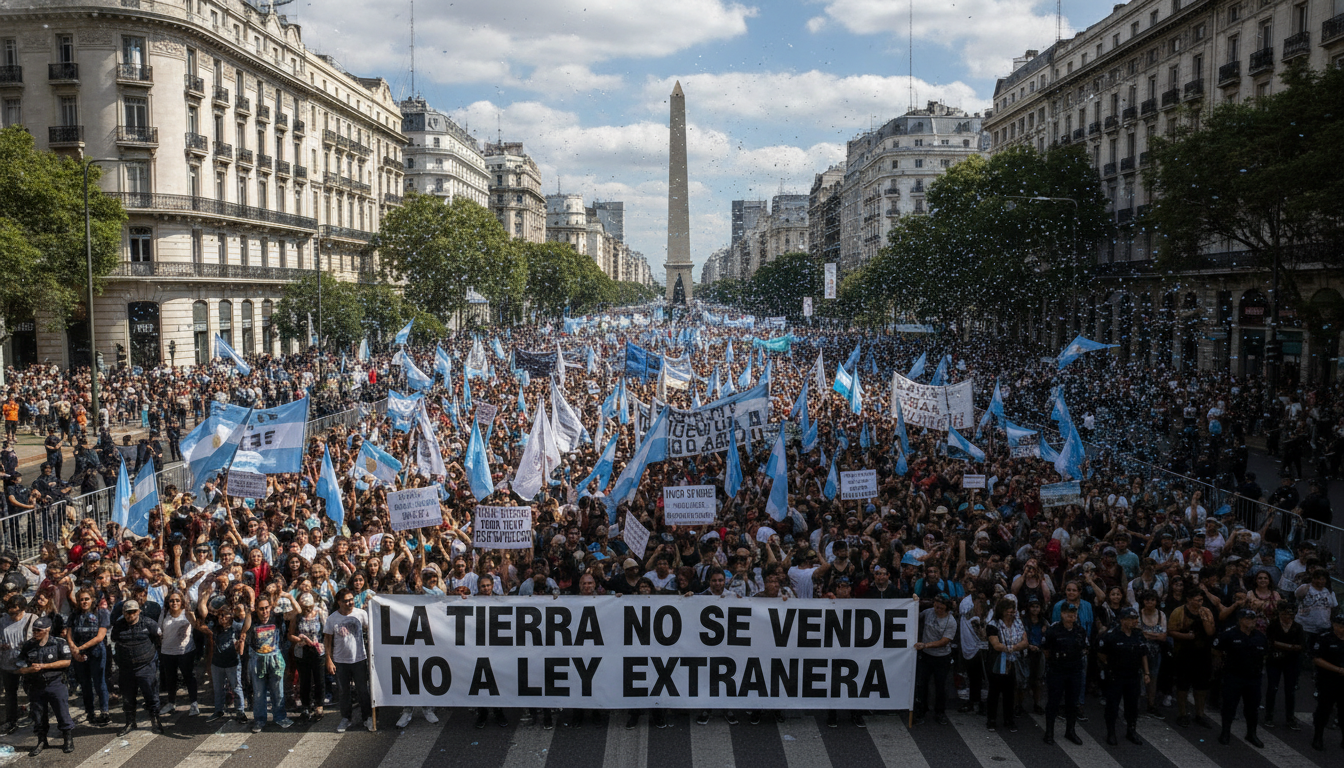
Argentina’s proposed land reform has drawn hundreds into the streets of Buenos Aires, where demonstrators on Aug. 2, 2026, said the Argentina land bill would open the country’s rural territory to unchecked foreign buyers. The demonstrations were led by Indigenous groups and allied civil society organizations, who say the measure threatens ancestral lands and local livelihoods. The government of President Javier Milei says the bill will attract investment and strengthen property rights, setting up a sharp political confrontation.
Protests in the capital
Hundreds of people gathered near government buildings and public plazas, carrying banners and chanting slogans against the Argentina land bill. Organizers said participants included Indigenous leaders, farmers’ associations and urban activists worried about long-term land use and sovereignty.
Police maintained a visible presence but the demonstrations were largely peaceful, organizers and participants said. The protests came as lawmakers and officials began public discussions about the content and likely trajectory of the proposed legislation.
Indigenous leaders warn of territorial loss
Indigenous groups who took part in the protests urged lawmakers to consider the cultural and historical significance of rural territories. They argued the proposed removal of foreign ownership limits could accelerate land grabs and displace communities that rely on shared access to ancestral areas.
Representatives described fears that large-scale purchases by foreign corporations or investment funds would undermine communal rights and damage ecosystems relied upon for subsistence. Community leaders called for consultations and legal protections to be included before any changes proceed.
Government frames bill as investment and rights reform
The Milei administration has defended the Argentina land bill as a way to modernize property laws and draw foreign capital to agriculture and infrastructure. Officials said removing ownership caps would clarify titles, expand credit access for landholders and boost productivity in the export-oriented farm sector.
Government statements emphasized that strengthened property rights would create predictability for investors and farmers alike. Supporters within pro-market circles argue the changes could bring new technology and jobs to rural provinces, though they acknowledge concerns about scale and regulation.
Economic and legal stakes for agriculture
Economists and agricultural analysts say the bill could reshape land markets, potentially increasing competition for prime farmland and pushing up prices in regions attractive to international buyers. Some warn that rapid consolidation of holdings could disadvantage small and medium-scale producers, while others say proper regulatory design could mitigate those risks.
Legal experts expect the proposal to face scrutiny over land-use rules, environmental safeguards and possible constitutional challenges from groups claiming collective or customary rights. The debate is likely to revolve around whether mechanisms for oversight, taxation and community consultation are adequate to prevent abuses.
Political fallout and congressional path
The Argentina land bill has become a flashpoint in national politics, forcing parties and provincial leaders to take positions. Opposition figures and provincial governors from agricultural regions have voiced mixed reactions, with some emphasizing the need to protect local producers and others open to reform tied to stronger safeguards.
Legislative analysts say the bill will need to pass through committee stages and public hearings before a full congressional vote, and that amendments are likely as lawmakers try to balance investment incentives with social and environmental protections. Activists have vowed to keep up protests and legal pressure while the measure moves through the legislative process.
The standoff in Buenos Aires underscores the broader tension between efforts to open markets and demands to protect community rights and ecological values. As debates continue, both sides have signalled they will press hard to shape a final law that reflects their competing priorities.
