
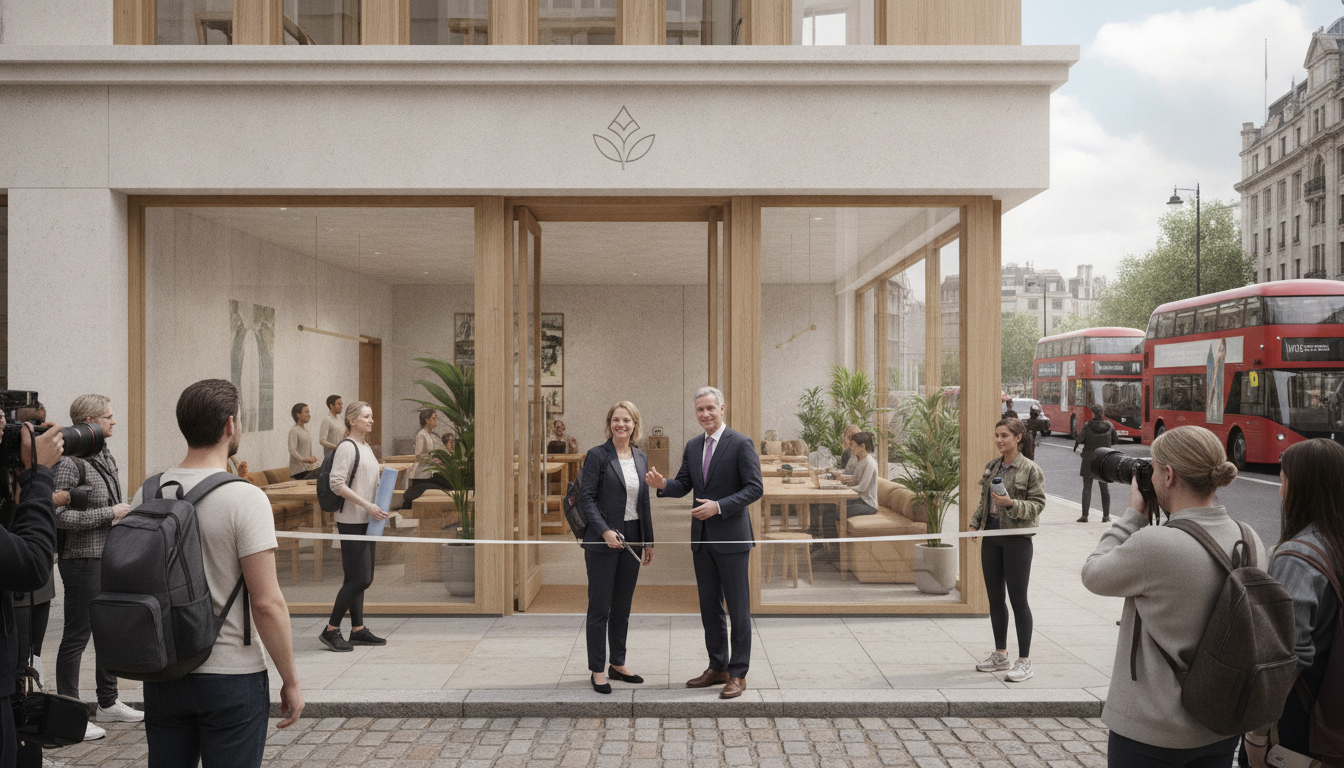
Lift House: London’s new hacker house that prioritizes wellness over Silicon Valley hustle
Lift House offers a London hacker house model that combines co-living, startup workspaces and shared wellness rituals to challenge Silicon Valley-style grind culture.
Lift House opened in East London this spring as a six-person co-living and startup workspace designed to be an “anti–San Francisco” hacker house. Rowan Aldean, one of the founders and a resident, said the goal is a holistic improvement in life rather than the short-term demo-day sprint that defines many Bay Area houses. The home, officially launched in March with residents moving in from May, blends shared work areas, communal meals and routines aimed at sustaining founders through the early stages of company building.
Design and mission of the Lift House
The six-story property faces the water in a new East London development and is named both for its elevator and its mission to uplift founders. Residents describe the space as part startup workspace, part co-living home, where private workrooms sit alongside a living room used for piano, board games and rooftop dinners. The house’s founders say it is intentionally different from accounts of some San Francisco hacker houses that emphasize nonstop hackathons and high-decibel social events.
Rowan Aldean, who previously sold a company and now runs an applied-AI startup, and his wife, Zahraa, who is entering a pharmaceutical research PhD program, occupy the house alongside four other founders and early-stage operators. The group emphasizes routines, community norms and a slower, more sustainable approach to building businesses in London.
Daily life and wellness practices among residents
Residents set flexible lengths of stay, from a month to several months, and share chores, groceries and cooking responsibilities. Weekly rituals include group journaling on Sundays, introduced by resident David Amor, which the group uses to track time in nature, nutrition and exercise. Social activities range from Tuesday volleyball league matches to rooftop dinners showcasing the house’s multicultural menus.
Residents report tangible changes to daily habits since moving in: more consistent meals, improved sleep and increased exercise. Individual schedules vary—some founders start early with focused morning work and cold showers, others begin later—but the shared culture centers on balance rather than endurance-based productivity.
How Lift House fits into London’s startup and AI boom
Lift House arrives amid a surge of investor interest in London tech. According to Dealroom data cited by the residents, London AI startups have raised roughly $12 billion in 2026 alone, contributing to about $14.7 billion raised across all London startups this year. Several high-profile companies founded by DeepMind alumni and others have secured large rounds, fueling optimism across the ecosystem.
That momentum helps explain why founders seek spaces that combine intense focus with a sustainable lifestyle. Residents point to local success stories like DeepMind as evidence that frontier innovation can be achieved without performative culture. The Lift House model taps into a broader “Londonmaxxing” trend among founders who aim to extract the best elements of the city—talent, culture and investor access—without adopting Valley-style posturing.
Funding strategies and the pull of the United States
While founders praise London’s talent pool and proximity to Europe, many acknowledge the United States remains a vital market and funding source. Residents note that U.S. investors frequently prefer founders to relocate, or at least to have a meaningful U.S. presence, to secure larger checks and faster growth. Several residents are already planning or executing U.S. expansions while maintaining bases in London.
Local funding mechanisms also shape early-stage decisions. Residents point to U.K. tax incentives such as SEIS and EIS as attractive for angel investors and early fundraising, allowing some startups to avoid early venture capital rounds. Still, the trajectory many founders anticipate is a U.K. start followed by a U.S. scale-up, reflecting a common transatlantic path in recent European startup exits and expansions.
Community standards, selection and the house’s future
Lift House screens prospective residents for interests outside work and an emphasis on fitness and wellbeing, establishing criteria designed to preserve the house’s culture. The approach contrasts with earlier London attempts at hacker houses that prioritized relentless work; Aldean says the goal here is building something that lasts rather than burning out chasing short-term wins. The lease has roughly a year remaining, and residents say they hope to extend the project while other organized co-living hacker houses expand into London.
The house also serves as a low-key venue for networking: rooftop dinners, investor conversations and small gatherings allow founders, researchers and operators to exchange ideas without the spectacle associated with some Silicon Valley events. Residents argue that this quieter model suits London’s cultural dynamics, where a mix of ambition and humility shapes how success is displayed.
Lift House positions itself as an experiment in sustainable founder culture—one that pairs rigorous product work with communal rituals and a life outside the office—reflecting both London’s rising role in AI and a preference among some founders for balance over burnout.
