
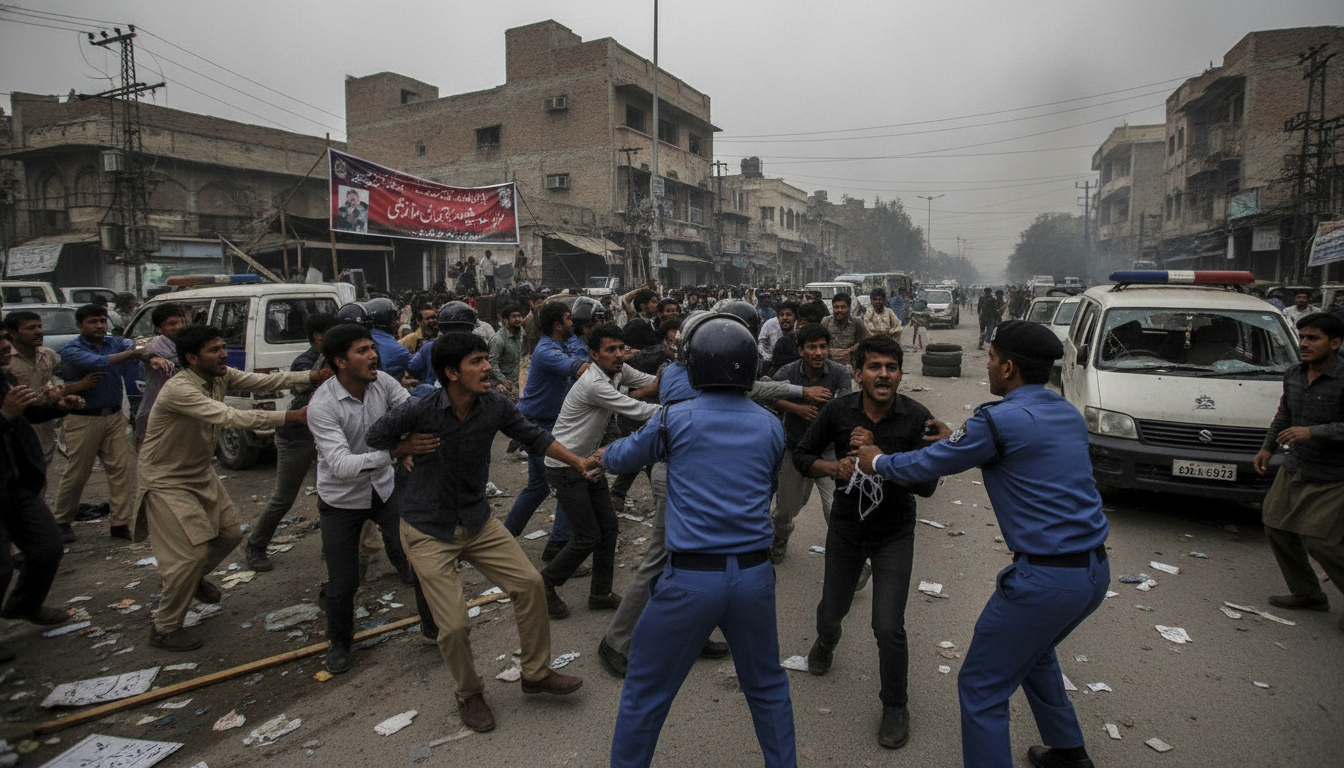
Kashmir clashes prompt Lahore arrests as banned group reports at least 30 dead during election week
Kashmir clashes prompted protests in Lahore on 1 August 2026, where police detained several demonstrators who marched in solidarity with Pakistan-administered Kashmir. The unrest follows claims by a banned Kashmiri activist group that at least 30 people were killed in clashes during regional elections this past week. Authorities and rights groups have offered differing accounts as tensions flared across multiple cities.
Lahore protest and detentions
Several dozen people gathered in central Lahore on Saturday to protest reports of violence in Pakistan-administered Kashmir, according to eyewitness accounts. Demonstrators carried signs and chanted slogans demanding investigations into the reported deaths and accountability from security forces.
Police moved in to disperse the rally and detained a number of protesters, officials said, describing the arrests as necessary to maintain public order. Organizers and participants characterized the detentions as an attempt to silence solidarity protests and restrict public expression.
Claims of at least 30 fatalities in election clashes
A banned Kashmiri activist group released a statement this week claiming that at least 30 people were killed in clashes linked to regional elections in Kashmir. The group did not provide independently verifiable evidence in its statement, and the figure has not been confirmed by government authorities.
Officials in the region have been cautious in responding to casualty claims, citing the need to verify reports and investigate incidents. Human rights organizations often call for transparent, impartial probes whenever allegations of election-related violence and deaths surface.
Police response and crowd-control measures
Law enforcement in Lahore deployed officers to key areas ahead of the scheduled demonstrations, citing the need to avert escalation and protect citizens. Video and eyewitness accounts showed police forming cordons and, in some instances, detaining participants before the rallies could gain larger numbers.
Police spokespeople framed their actions as precautionary, saying they were responding to intelligence about potential disruption. Civil liberties advocates counter that pre-emptive detentions can suppress legitimate protest and hinder the peaceful expression of political grievances.
Timeline of reported election-week violence in Kashmir
The reported clashes occurred during a tense electoral period in Pakistan-administered Kashmir this past week, when local and regional contests brought heightened security measures. Accounts of violence emerged from several districts, with the banned group highlighting multiple incidents it described as brutal clashes between protesters and security forces.
Election officials have emphasized the importance of conducting polls while ensuring voters’ safety, but on-the-ground reports suggest that the atmosphere was fraught. The exact sequence of events and the attribution of responsibility for specific incidents remain matters under review by authorities and observers.
Reactions from political actors and rights groups
Political leaders in Pakistan and Kashmir have issued measured statements urging restraint and calling for calm, while also pledging inquiries where necessary. Opposition figures used the reports of violence to demand answers and to criticize the handling of the electoral process by local administrations.
International and domestic rights organizations typically monitor such episodes closely and may call for independent investigations if allegations of excessive force or unlawful killings are substantiated. So far, formal investigations or internationally verified casualty counts have not been announced.
Potential implications for local stability and elections
The emergence of reports claiming dozens of deaths during election week risks deepening mistrust among communities already wary of the voting process. If the allegations are corroborated, they could fuel further protests and complicate efforts to restore normalcy in affected areas.
Authorities face the twin challenge of addressing public concerns about violence while maintaining the integrity of electoral processes. How officials respond to demands for transparency and accountability may shape political dynamics in the weeks ahead.
Calls for independent verification and transparency
Observers and legal experts are likely to press for thorough, independent fact-finding to establish the circumstances behind the reported deaths and confrontations. Transparent investigations, involving credible local or international monitors where appropriate, are often viewed as critical to de-escalating tensions.
Failure to provide clear, timely information can entrench narratives on all sides and prolong unrest. Accountability measures and access for journalists and human rights monitors can help restore confidence in the official record.
The situation remains fluid, with authorities and local actors offering diverging accounts of what transpired during an election week marked by heightened tensions. Further reporting and verified investigations will be necessary to clarify the scale of the violence and to determine next steps for restoring public trust.
