
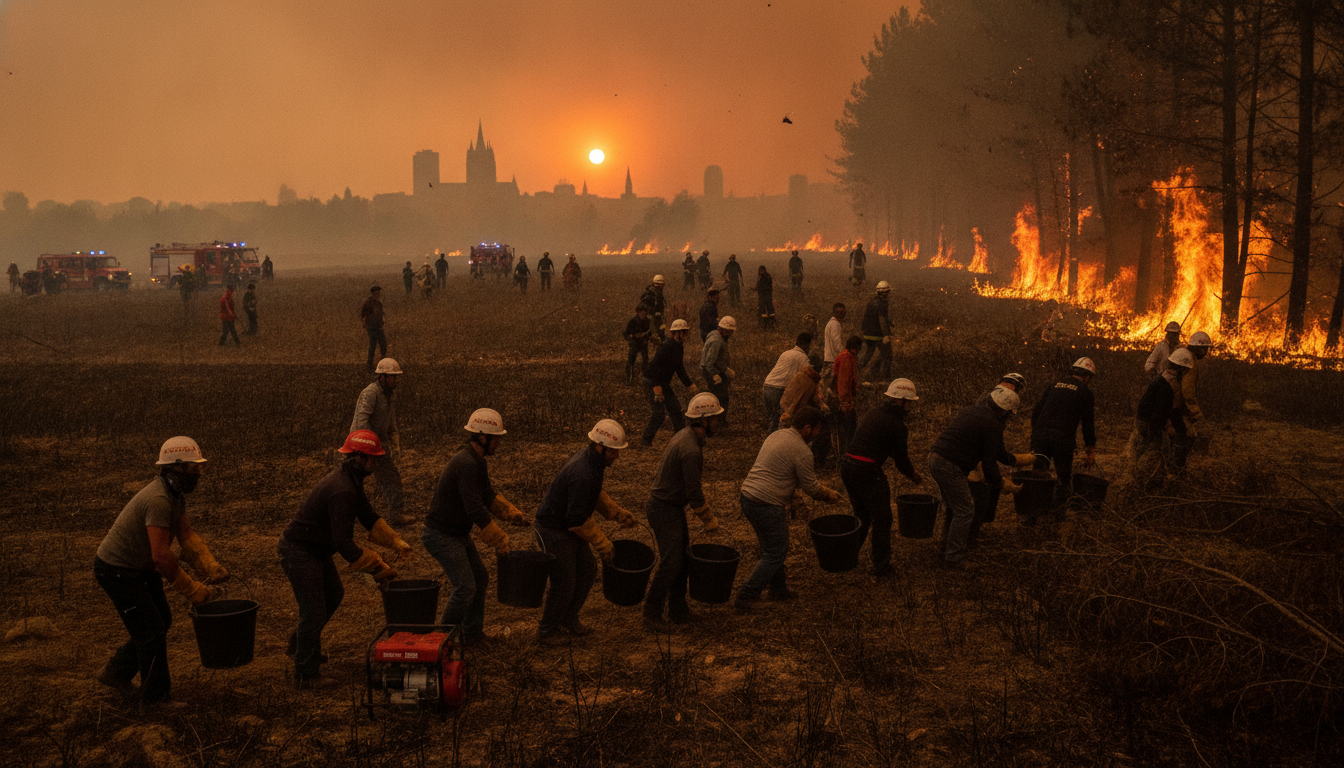
Bordeaux wildfire forces residents into frontline defence as blazes spread
Bordeaux wildfire draws residents into frontline response as flames spread for more than a week, stretching firefighting resources and threatening neighbourhoods on the city’s outskirts.
Residents in Bordeaux have mobilized to fight a wildfire that has burned for more than a week on the edges of the city, stepping in where professional crews cannot be everywhere. The Bordeaux wildfire has spread across a wide area of southwestern France, and for now volunteer civilians are among the primary lines of defence guarding homes and critical approaches. Local emergency services say the scale and dispersion of the fire have left gaps in coverage that neighbours and community groups are working to fill.
Residents Mobilize to Battle Flames
Neighbourhood groups and individual volunteers have organised makeshift crews to protect properties and create fire breaks where access is possible. They are using handheld equipment, water pumps from private wells, and improvised barriers to slow the advance of flames into populated areas. These efforts are concentrated around fringe districts and wooded tracts that lie between the blaze and the city.
Firefighting Resources Stretched Thin
Professional firefighting units remain on the scene but commanders report the fire is too spread out for a full defensive cordon. Large sections of burning ground are widely separated, requiring teams to prioritise the most immediate threats rather than holding every perimeter. That gap in coverage has made civilian intervention a critical, if risky, component of the immediate response.
Volunteer Tactics and Local Organization
Volunteer groups have focused on early warning, property protection and liaison with emergency services to avoid duplication of effort. Many volunteers are coordinating through local associations and social media channels to share locations of active fire fronts and safe routes for evacuation. Organisers emphasise that volunteers are not replacing trained crews but are providing vital local knowledge and manpower in hard to reach areas.
Evacuations and Community Safeguards
Authorities have advised residents in the most threatened neighbourhoods to prepare for evacuation and to follow official instructions on routes and shelter locations. Some families have already moved to safer parts of the city while others remain on standby to protect second homes and agricultural assets. Emergency centres and community halls have been readied to receive those displaced by shifting fire lines.
Authorities Coordinate Air and Ground Efforts
Regional emergency services have deployed available aerial and ground assets to the hardest hit sectors and continue to assess where reinforcements are most needed. Water bombers and helicopters have been used where conditions allow, while ground teams tackle hotspots and protect infrastructure. Coordination between municipal, regional and national services remains focused on securing approaches to the city and reducing immediate risks to residents.
Weather and Landscape Complicate Suppression
The pattern and pace of the fires reflect a combination of dry vegetation, fragmented terrain and weather conditions that have allowed flames to leap across divides. Steep, forested slopes and pockets of scrub have made some areas difficult for heavy machinery to access. Forecasts and on the ground observations are being monitored closely as shifting winds and daytime heating can rapidly alter threat levels.
Residents and emergency teams face a delicate balance between protecting property and ensuring safety, with many volunteers operating in hazardous conditions. Organisers and authorities continue to urge anyone without training or proper equipment to avoid taking unnecessary risks and to prioritise personal safety.
For the moment the frontline work of Bordeaux residents underscores the community dimension of wildfire response when fires outpace available resources. As crews and volunteers continue to contest the flames, officials say sustained coordination and cautious local action will be essential to prevent further encroachment on the city.
