
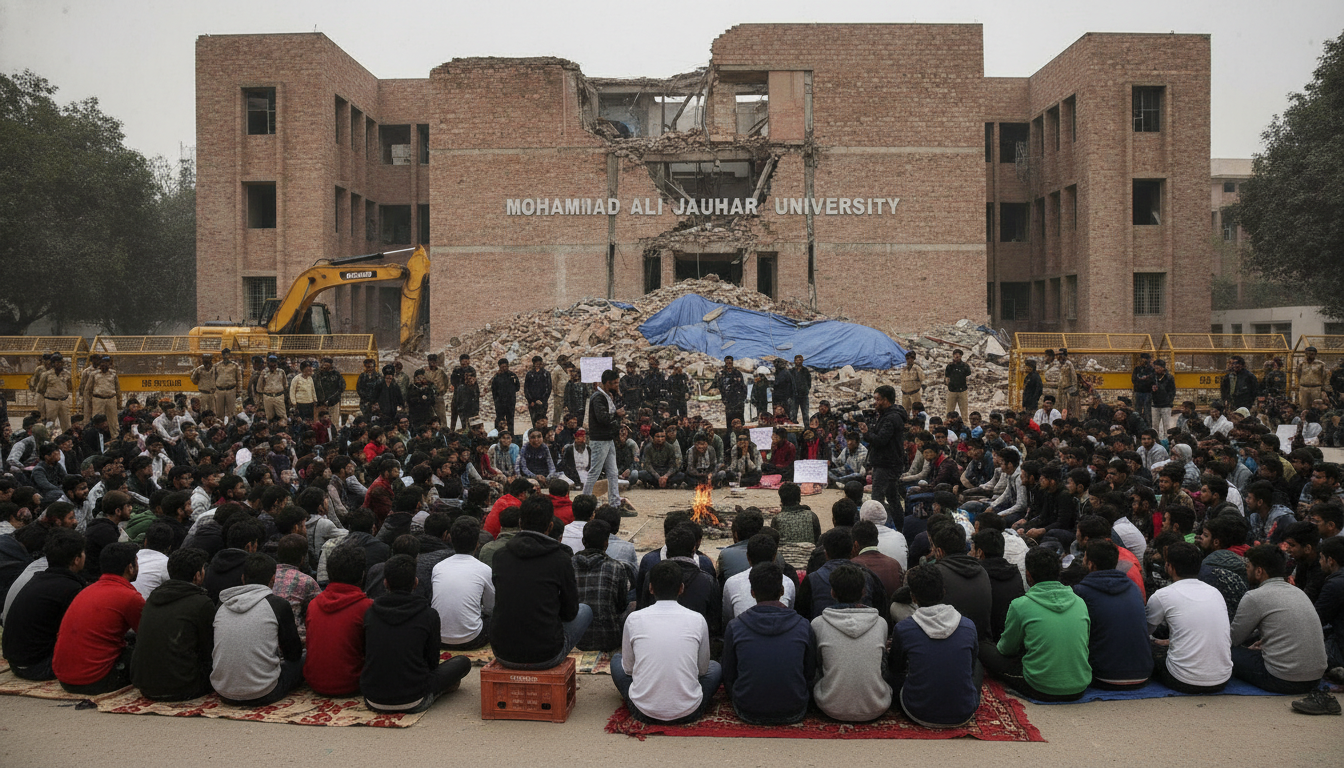
Mohammad Ali Jauhar University demolition order sparks indefinite student sit-in in Rampur
Indefinite sit-in by students opposes the Mohammad Ali Jauhar University demolition in Rampur; interim stay issued July 27, 2026; legal challenge underway.
More than 100 students, alumni and residents have launched an indefinite sit-in at Mohammad Ali Jauhar University in Rampur to oppose a demolition order that targets 38 of the institution’s 40 buildings. The sit-in began after a July 15 directive from the Rampur Development Authority ordering the university to pull down the structures by August 5, 2026. An interim stay was issued by the state administration on July 27, 2026, but university officials say the order has not been quashed and legal proceedings are continuing.
Sit-in grows as campus community demands reversal
The protest outside the university’s main gate has drawn students from a campus that serves about 3,000 enrolments across a 250-acre site. Demonstrators sit on mats in the July heat, wave the national flag and chant calls to halt the Mohammad Ali Jauhar University demolition. Organizers say the action will continue until the demolition order is withdrawn or a court fully rescinds the directive.
Authorities cite lack of approvals for most buildings
Rampur officials argue that only two of the campus buildings had valid approvals when examined by a regional officer, and that the remaining 38 structures violated regulatory norms. The July 15 notice from the Rampur Development Authority set an August 5 deadline for voluntary demolition, warning that authorities would use bulldozers and recover costs if the university did not comply. District magistrate and RDA vice chairperson Ajay Kumar Dwivedi told reporters the action followed the regional report and legal procedures.
University leaders reject jurisdiction claim and legal basis
Vice Chancellor Zaheeruddin has disputed the RDA’s position, saying the university was established before the authority’s jurisdiction extended to Singankhera village in September 2024. He maintains that the courses offered are approved by the relevant government bodies and that the buildings were lawful at the time of construction. Zaheeruddin has described the demolition order as a violation of the constitutional right to education and said the university is pursuing a court verdict to quash the directive outright.
Political context deepens the dispute
The university’s founder, Azam Khan, is a long‑time Samajwadi Party leader who has been at odds with the current state government, and supporters cast the demolition order as politically motivated. Dozens of legal cases were filed against Khan after the BJP took power in Uttar Pradesh in 2017, and he has served time in custody on multiple convictions that his allies call driven by vendetta politics. The ruling party defends the action as enforcement of the law against illegal construction and accuses Khan’s supporters of politicizing the issue.
Students warn demolished campus would curtail education for women
Many protesters say demolition would disproportionately affect local access to higher education, especially for women. University officials report that nearly half of the student body is female, and several students at the sit-in said families chose the campus because they considered it a safe environment for daughters. Counselling camps offered by the state to transfer students to other institutions have not mollified demonstrators, who say relocation would be unacceptable and that parents would hesitate to send daughters elsewhere.
Wider pattern of demolitions raises rights concerns
Demolition drives in recent years have frequently inflamed communal tensions and been criticised by rights groups as targeting minority communities under the pretext of illegal encroachment. Protesters and some academics see the action against Mohammad Ali Jauhar University as part of a broader trend of using development rules against prominent Muslim institutions. Meanwhile, students at the sit-in have alleged pressure tactics, saying police have visited their families’ homes in attempts to dissuade the protest.
Legal representatives for the university and for the RDA held a meeting after the July 15 notice, and the institution has filed court challenges to the demolition order. The interim stay issued on July 27, 2026, forestalls an immediate enforcement tied to the August 5 deadline but does not resolve the underlying dispute over jurisdiction, approvals and alleged violations. Members of parliament from the Samajwadi Party have joined the protest delegation, intensifying the political spotlight on the case.
The campus remains the scene of daily demonstrations as students and alumni press for an outright cancellation of the Mohammad Ali Jauhar University demolition order and for legal clarity on the status of the buildings. With the matter now in the courts and political representatives taking opposing positions, the immediate future of the university and the educational prospects of its students will hinge on forthcoming judicial rulings and any administrative decisions to withdraw or uphold the directive.
