
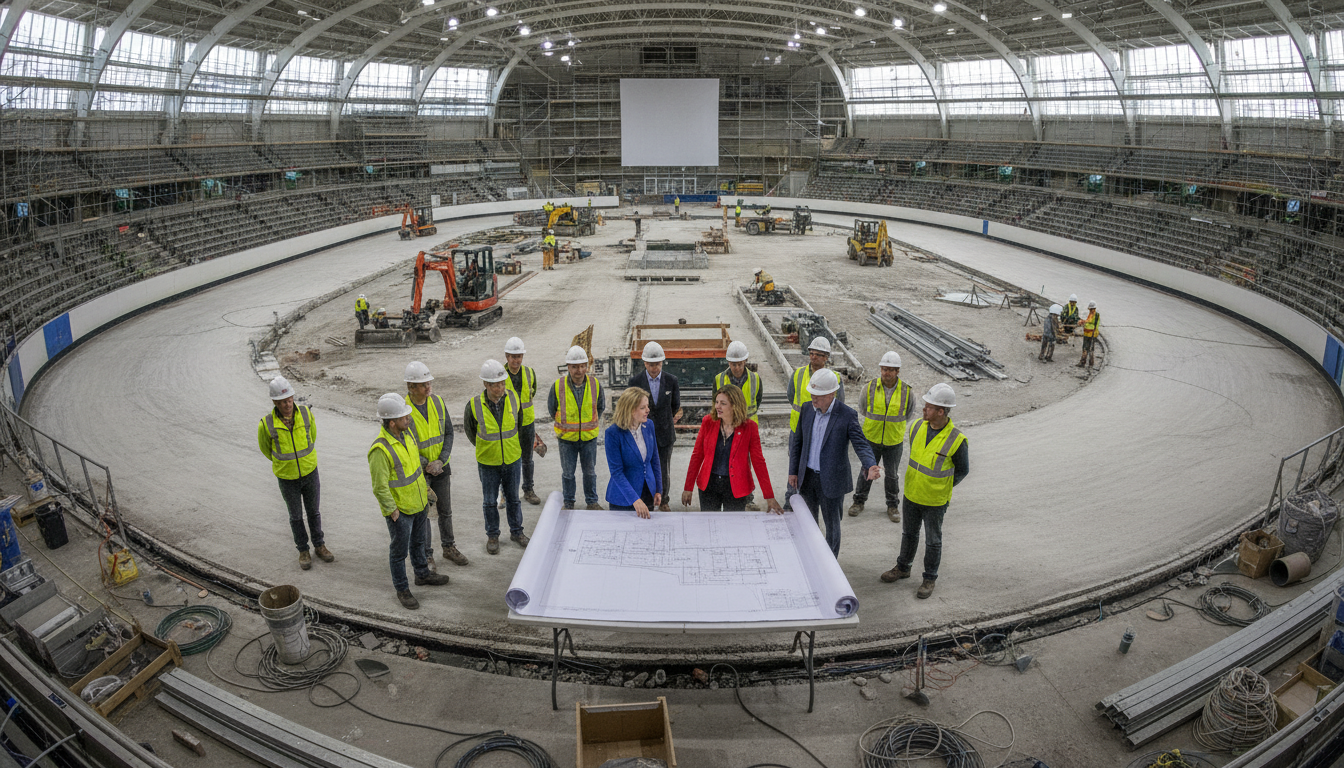
Calgary Olympic Oval upgrade gets $52M split between federal and Alberta governments
Federal and Alberta governments will each contribute $26M to a $52M Calgary Olympic Oval upgrade to replace aging ice systems and support athletes and community use.
The federal and Alberta governments announced a jointly funded $52-million plan that will pay for a Calgary Olympic Oval upgrade to renew the speedskating facility’s aging ice-making systems. The Oval, located on the University of Calgary campus, has served as a community hub and the home of Canada’s national speedskating team for nearly four decades. Officials say the work responds to persistent brine leaks from deteriorating pipe connections beneath the rink that threaten the venue’s ability to produce competitive ice.
Funding agreement and contributions
The provincial and federal governments are splitting the $52-million contribution evenly, with each level committing $26 million to the project. The announcement included additional federal investments aimed at other winter-sport infrastructure and athlete supports. The coordinated funding reflects a joint effort to preserve a facility built for the 1988 Winter Olympics that remains central to high-performance sport in Canada.
Scope of the Calgary Olympic Oval upgrade
Project planners say the Calgary Olympic Oval upgrade will focus on renewing the ice-making infrastructure that has reached the end of its service life. Work is expected to target the brine piping and associated refrigeration systems that keep the oval at competitive standards. The renewal will also address long-term durability to avoid recurring leaks and to extend the facility’s operational life for athletes and community users.
Facility history and national role
Opened for the 1988 Winter Olympics, the Oval has hosted national and international competitions while serving local skaters, university athletes and recreational users. It has been the training base for Canada’s speedskating program for almost 40 years and is widely regarded as an essential part of the country’s high-performance sport network. Maintaining the Oval is also seen as preserving legacy infrastructure from Calgary’s Olympic investment.
Impact on athletes and community access
Planners indicate the renewal work will be staged to minimize disruption to national team training and community programming, though some temporary adjustments are likely. High-performance athletes and local clubs depend on consistent ice time, so schedules and alternative training arrangements are expected to be coordinated during construction. Facility managers have emphasized the need to balance urgent repairs with access for university and community users.
Related federal investments in winter-sport infrastructure
As part of the broader announcement, the federal government added $7.67 million toward ski and snowboard facilities across Quebec, Yukon, Alberta and British Columbia. Officials also confirmed a $3-million top-up to the Athletic Assistance Program, which provides monthly financial support to Canada’s high-performance athletes. Those measures are framed as complementary investments to strengthen winter-sport facilities and athlete supports nationwide.
Timeline, procurement and next steps
Project teams will move into detailed design, procurement and permitting phases before construction begins, with the schedule to be provided as plans are finalized. Procurement will follow public-sector guidelines for tendering work on government-funded infrastructure, and stakeholders say community consultation will form part of planning. The emphasis from both governments is on delivering a durable upgrade that preserves the Oval as a national training resource.
The Calgary Olympic Oval upgrade is positioned as a preservation and modernization effort that seeks to protect a cornerstone of Canada’s speedskating program while maintaining community access. With joint funding secured, project leaders now shift focus to planning and execution to ensure the facility remains operable and resilient for future generations of athletes and skaters.
