
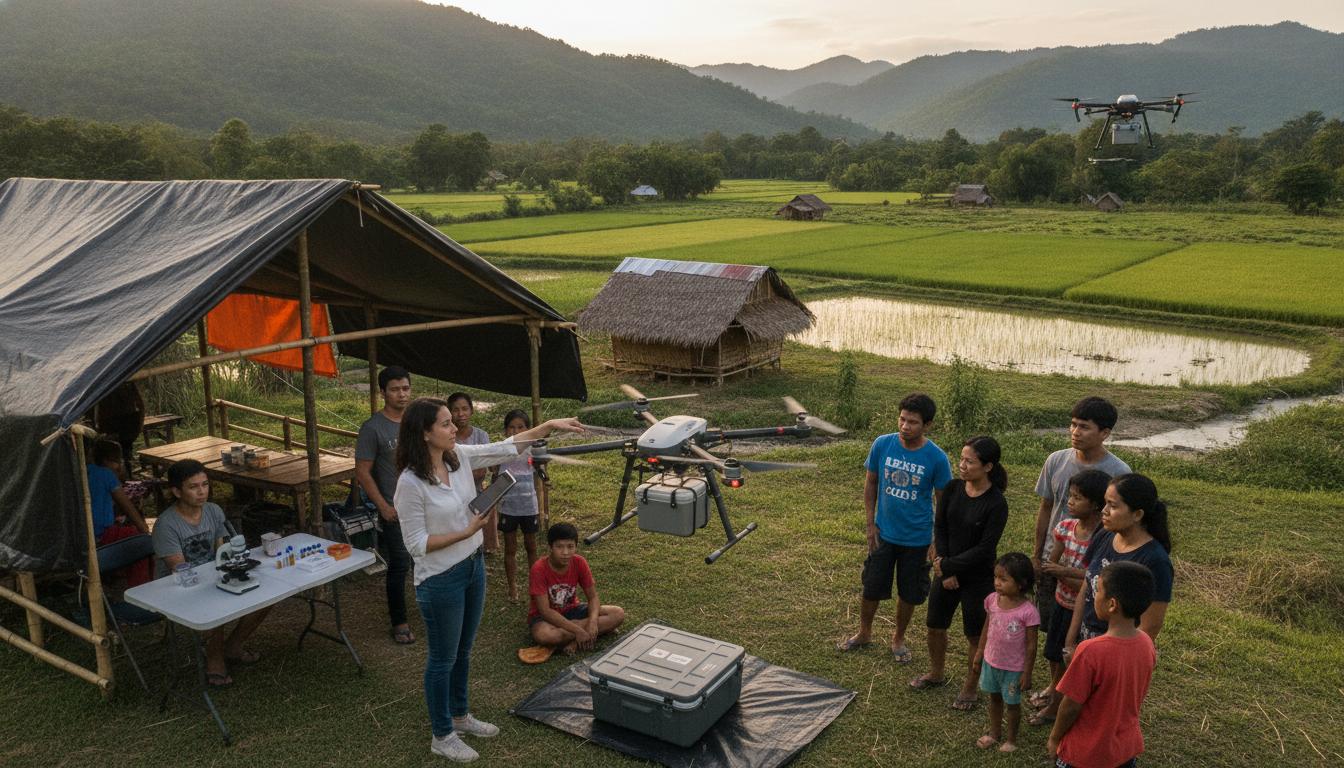
Drones fight tuberculosis: Filipino doctor uses UAVs to fly samples and save lives in remote islands
Filipino doctors use drones to fight tuberculosis, flying samples to remote islands to speed diagnosis and treatment and reduce deaths in isolated communities.
A new effort led by Dr. Heidi Sampang is using unmanned aerial vehicles to transport sputum samples and essential medical supplies between remote communities and testing laboratories in the Philippines. The project aims to shorten the time between sample collection and diagnosis in a country where tuberculosis remains a leading cause of death, with roughly 98 deaths a day attributed to the disease. By cutting transit times across mountainous terrain and hundreds of islands, health teams say the drones are already changing how care reaches isolated patients.
Doctors deploy drones to cut diagnostic delays
Dr. Sampang and her team began flying small, weather-resistant drones to carry diagnostic samples from village clinics to central laboratories. The goal is to reduce the days or weeks that samples can spend in transit when conventional transport is unreliable or unavailable.
Clinicians report that earlier diagnosis allows quicker initiation of treatment, which is critical for both patient survival and limiting community transmission. Faster turnaround also reduces the number of follow-up visits required of patients who must otherwise travel long distances for results.
High daily death toll highlights urgency of solutions
Tuberculosis continues to take a heavy toll across the Philippines, particularly in rural and island communities where healthcare access is limited. Public health officials estimate tens of thousands of deaths annually, with the immediate figure of about 98 deaths per day underscoring the urgency for new delivery strategies.
Delayed diagnosis and interrupted treatment are common in areas served by small clinics without on-site testing. Health workers say those delays exacerbate severe disease and increase the risk of drug-resistant strains emerging.
How drones carry samples and supplies between islands
The drones used in the program are configured to carry small, sealed biological specimen containers and lightweight medical supplies such as cartridges for rapid tests and medication packages. Flights are planned to connect barangay health stations with municipal laboratories, bypassing hours of boat or road travel.
Teams follow strict handling protocols to protect sample integrity, including temperature control where needed, secure packaging and chain-of-custody documentation. Pilots and healthcare staff coordinate closely to align flight windows with clinic operating hours and laboratory capacity.
Early results show faster turnaround times and treatment starts
Preliminary reports from participating clinics indicate substantial reductions in diagnostic turnaround time. In some routes, what previously took several days by boat now takes hours by drone, allowing clinicians to begin treatment the same or next day.
Community health workers say patients are more likely to start and adhere to therapy when results and medication arrive quickly. Early treatment initiation is also essential to reducing household and community transmission, especially in densely populated rural settlements.
Operational hurdles and regulatory questions remain
Despite promising outcomes, the drone program faces technical and operational challenges, including weather, payload limits and battery life that constrain flight distance and frequency. Maintenance and training costs are significant, and local teams must develop protocols for safety and emergency recovery when flights are disrupted.
Airspace regulation and coordination with national aviation authorities are also necessary to expand operations safely. Program leaders stress the importance of clear rules, reliable communications and community engagement to address privacy and safety concerns.
Cost, scale-up and integration with public health systems
Health officials and funders are weighing the cost-effectiveness of drone logistics against investments in local laboratory capacity and conventional transport improvements. Proponents argue that in archipelagos and mountainous regions, drones offer a complement to ground-based systems rather than a complete replacement.
Scaling the initiative will require sustainable funding, procurement policies, and integration with national tuberculosis programs to ensure supplies, data flows and patient follow-up are properly coordinated. Partnerships between clinical teams, local governments and technology providers will be central to long-term success.
Voices from communities and medical teams
Clinicians working on the front lines describe relief at being able to deliver faster care to patients who previously faced long journeys for basic diagnostics. Community leaders report increased trust in local clinics when results arrive quickly and treatment begins without delay.
Patients and families interviewed by health teams say faster diagnosis has reduced the financial and social burden of travel, and has made adherence to months-long TB therapy more feasible. The human impact, program staff note, is often the most compelling measure of success.
The drone program led by Dr. Sampang is not a silver bullet, but it represents a practical use of technology to address persistent gaps in access to care. As teams refine operations and navigate regulatory and funding hurdles, the approach could become a model for delivering critical medical services across other remote regions of the Philippines and similar archipelagic settings.
