
UNICEF: Children killed in Gaza average one per day since October cease-fire
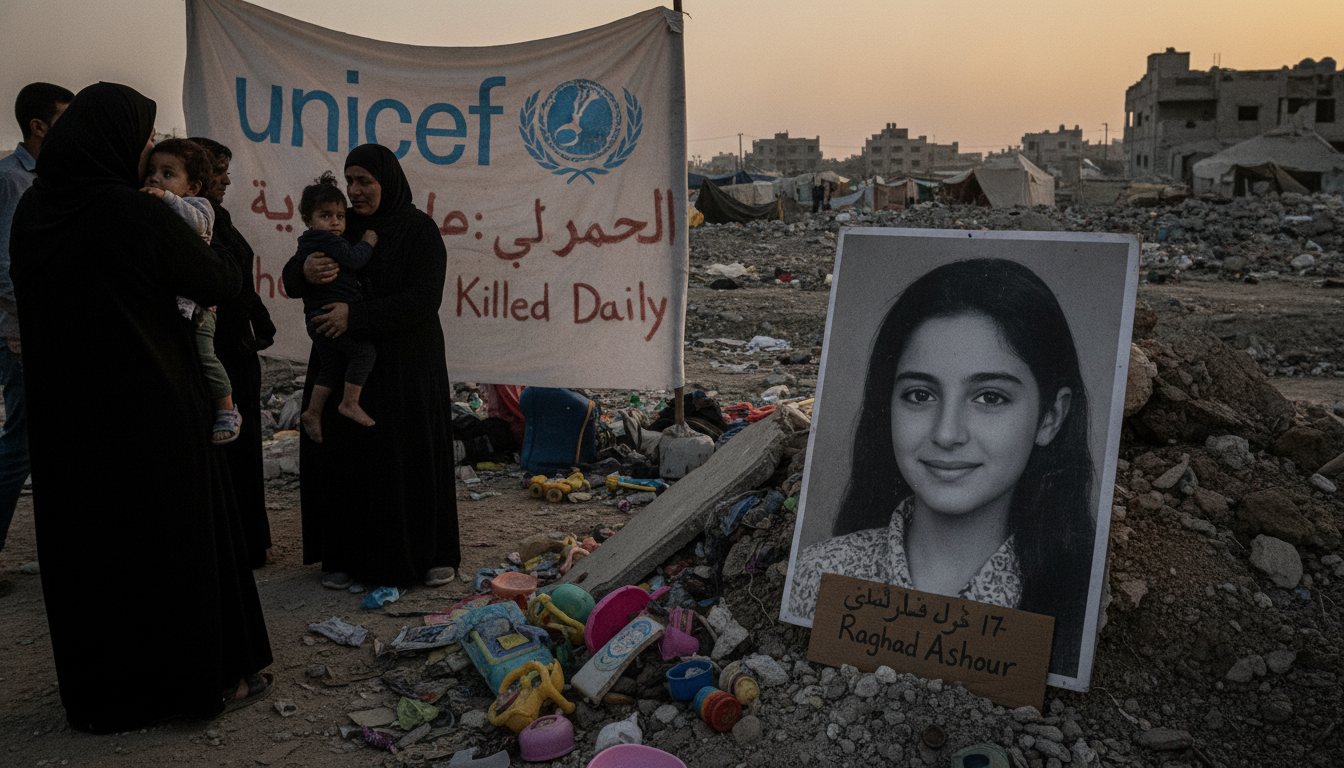
UNICEF says Gaza has averaged one child killed per day since the October cease-fire; 17-year-old student Raghad Ashour was struck by an airstrike as she walked home from school.
A UNICEF tally released this week says children killed in Gaza have averaged one death per day since the cease-fire in October, a stark indicator of ongoing risk to civilians in the territory. Among the latest fatalities was 17-year-old student Raghad Ashour, who was killed by an airstrike while walking home from school, underscoring the vulnerability of students and young people. The figures and Raghad’s death have prompted renewed concern from humanitarian organizations about protection of children in Gaza. Aid groups say the pattern is eroding basic daily life and access to education across the territory.
UNICEF tally and recent figures
UNICEF’s analysis indicates that, on average, one child or teenager in Gaza has been killed every day since the October cease-fire. The agency has documented deaths and injuries among children across a range of incidents, with families, shelters, and schools affected.
UNICEF officials note the daily average reflects a combination of direct strikes, unexploded ordnance, and intermittent clashes that continue to endanger civilians. The tally is being used by relief agencies to highlight the human cost of sustained insecurity for the territory’s young population.
The death of Raghad Ashour
Seventeen-year-old Raghad Ashour was walking home from school when she was struck by an airstrike, according to local reports confirmed by humanitarian sources. Raghad’s death has been cited by UNICEF and other groups in briefings about the ongoing risks faced by children attempting routine activities.
Her killing has been described by community members as emblematic of a wider pattern in which ordinary movements—routes between school, market and home—have become life-threatening. Local health services recorded the incident among a string of recent civilian casualties treated in Gaza medical facilities.
Impact on schooling and family life
The repeated deaths of children in Gaza have had a measurable effect on schooling, with many parents reluctant to send children back to classrooms amid continuing risks. Attendance rates and learning opportunities are reported to be disrupted in multiple areas as families weigh safety against the need for education.
School facilities themselves have sometimes been used as temporary shelters or have been damaged, complicating efforts to restore normal education. Educators and aid workers warn of long-term consequences for a generation that faces interrupted schooling and trauma.
Humanitarian response and medical capacity
Humanitarian organizations have continued to provide emergency care and psychosocial support while urging greater access for medical teams and supplies. Local hospitals and clinics report high pressure on emergency wards treating children, with staff often coping under resource constraints.
Relief agencies are also calling for safe humanitarian corridors and protection measures to ensure children can move to schools and clinics without facing attacks. The international community has been appealed to increase support for trauma care and child-focused services.
Cease-fire timeline and continuing violence
The October cease-fire that began a period of relative calm has not eliminated all hostilities, according to monitoring groups and aid organizations. Sporadic strikes, artillery fire, and unexploded ordnance incidents have continued to put civilians at risk, contributing to the daily averages recorded by UNICEF.
Observers note that a cease-fire can reduce large-scale confrontations but still leave localized violence and hazards that disproportionately affect civilians, especially children. The persistence of such incidents has driven calls for stronger enforcement and verification mechanisms.
Calls for protection and accountability
Humanitarian organizations, including UNICEF, are urging parties to the conflict to take immediate steps to protect civilians and to investigate incidents that result in child casualties. They emphasize the need for transparency, accountability, and measures that prevent children from being caught in hostilities.
Donors and rights groups are pressing for increased monitoring and for guarantees that schools, hospitals and displacement sites will be respected as protected spaces. Advocates say protecting children requires both immediate safeguards and longer-term commitments to safety and recovery.
The death of Raghad Ashour and the UNICEF average of one child killed per day since the October cease-fire have renewed international attention on the plight of Gaza’s youngest residents. Aid agencies say protecting children must be a priority for all parties and for the global community if the cycle of harm is to be broken.
