
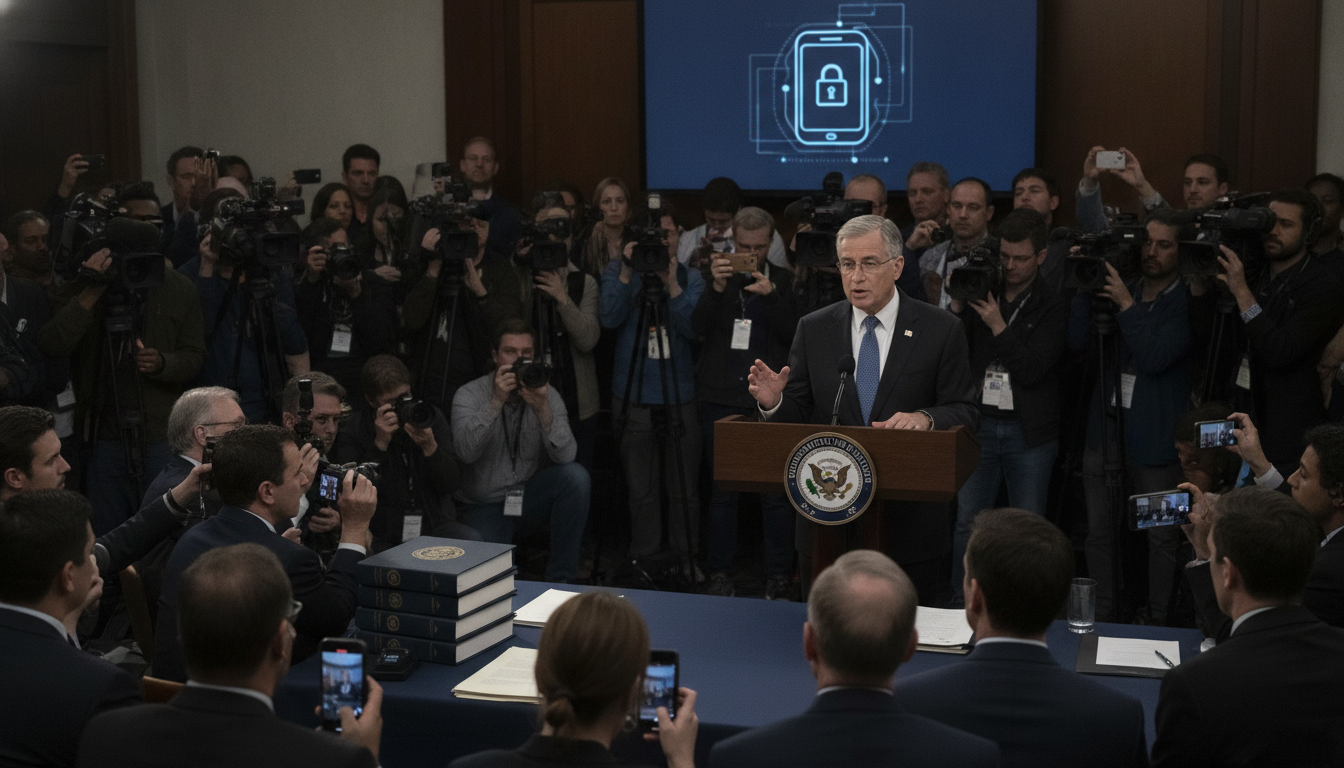
Justice Department Charges Traveler Over Duress Passcode That Wiped Phone at U.S. Border
U.S. prosecutors say an Atlanta man handed a GrapheneOS “duress passcode” that erased his phone at a border checkpoint, triggering a federal indictment.
Indictment alleges duress passcode triggered phone wipe
An Atlanta resident, Samuel Tunick, has been indicted by federal prosecutors for allegedly providing a passcode to U.S. border agents that caused his phone to delete its contents. The indictment charges Tunick under a federal statute prohibiting the knowing destruction of property to prevent seizure, and he has pleaded not guilty.
The charged conduct centers on a GrapheneOS feature commonly described as a “duress passcode,” which is designed to wipe a device when entered instead of the regular unlock code. The government’s filing alleges the wipe occurred after Tunick arrived back in the United States and was directed to a secondary inspection.
Technical feature at the center: GrapheneOS duress passcode
GrapheneOS is a privacy-focused, open-source replacement for Android that can be installed on certain Pixel devices. One of its options allows owners to configure an alternate passcode that deliberately erases stored data if used, a function intended to protect users facing coercion.
Prosecutors say Tunick’s device was running GrapheneOS when the alleged event occurred, and that the passcode he provided prompted the phone to appear to restart and clear its digital contents. Security experts who reviewed the case description told civil liberties advocates this use of the software in a criminal prosecution is unprecedented.
Border search practices and constitutional questions
The case highlights ongoing legal disputes over device searches and seizures at U.S. ports of entry. Federal authorities have long maintained broader search powers at the border, arguing that devices may be inspected without a warrant until a person is admitted to the country.
Tunick’s attorneys contend the search and subsequent seizure at Hartsfield-Jackson Atlanta International Airport on January 24, 2025, were unlawful and that he was repeatedly denied access to counsel during the encounter. They have filed a motion to suppress the evidence recovered from the phone, arguing agents lacked legal justification and improperly used allegations to justify the inspection.
The suppression motion also challenges whether the government’s actions were focused on legitimate criminal suspicion or instead driven by the traveler’s political associations. The defense says agents suggested their interest was not child exploitation material, as stated at the time, but linked to the client’s ties to an environmental movement opposing a law enforcement training complex.
Defense argues detention and seizure were unlawful
Defense attorneys argue that Tunick was subjected to an impermissible detention in secondary inspection and that agents coerced him into unlocking his device. The motion to suppress asserts Tunick was not informed of his rights and had no meaningful opportunity to consult counsel before providing the passcode.
According to the defense filings, when the alternate code was entered the phone’s screen went blank, flashed, and seemed to restart, effectively erasing visible data. Agents nonetheless retained the device and later permitted Tunick to enter the United States, the filings say. The defense is asking the court to exclude any evidence obtained through the contested inspection.
Experts weigh civil liberties and operational implications
Digital security specialists and civil liberties advocates say they are not aware of prior prosecutions that hinge on the deliberate use of a duress passcode to erase a device. They caution that the case may set a precedent for how authorities treat intentional data-wiping tools at border checkpoints.
Some security professionals advise travelers concerned about border searches to remove sensitive material before travel or use secure, minimal configurations when crossing international borders. The Electronic Frontier Foundation and other digital-rights groups have published guidance on protecting data and understanding travelers’ rights at U.S. entry points.
At the same time, prosecutors emphasize the government’s interest in preserving evidence and preventing the destruction of property. The indictment invokes a federal statute criminalizing the knowing destruction or damage of property to obstruct seizure, and the Justice Department is pursuing the case under that provision.
Tunick’s legal team describes the use of the statute here as rare, and an assistant federal public defender noted that indictments under that provision are uncommon. The court’s resolution of the suppression motion may determine whether the evidence obtained from the device can be used at trial.
The federal court in Atlanta is expected to rule on Tunick’s motion later in 2026, a decision that could clarify how duress passcodes and similar privacy tools are treated in the context of border inspections. The outcome may influence both legal strategy and the behavior of privacy-minded travelers who use erasure features to protect their data.
