
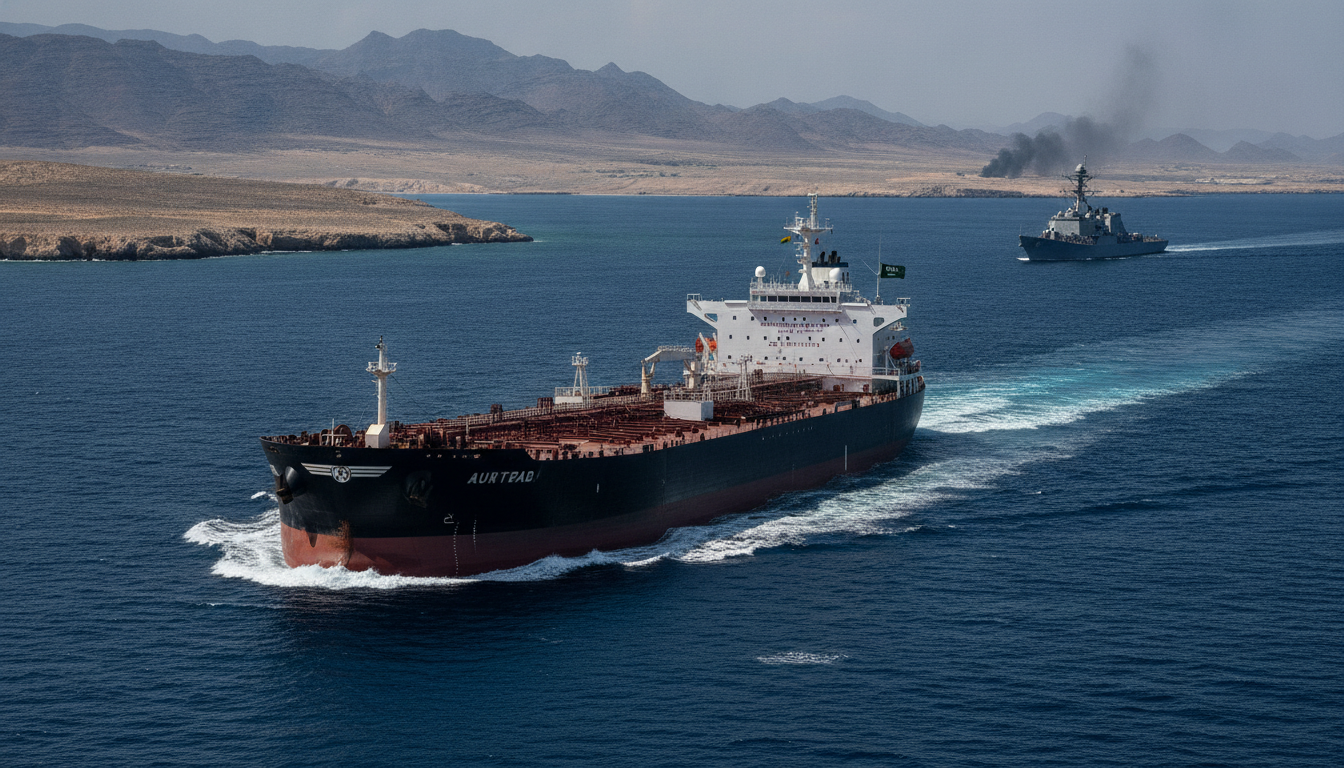
Houthi naval blockade forces Saudi crude tankers to turn back as U.S. and Iran exchange strikes
Houthi naval blockade in the Red Sea forces Saudi-bound tankers to reverse course while U.S. strikes on Iran and Tehran’s retaliation escalate risks to global shipping.
The Houthi naval blockade announced this week prompted at least two oil tankers loaded with Saudi crude to reverse direction in the Red Sea, a dramatic sign of how the conflict has spread to key maritime chokepoints and disrupted shipments bound for Asia. The declaration to close the Bab al‑Mandeb strait to Saudi-linked shipping came amid broader exchanges between U.S. forces and Iran that have included repeated strikes and retaliatory strikes across the Gulf. (apnews.com)
Tankers Turned Back After Houthi Blockade
Two commercial tankers loaded with Saudi crude altered their planned routes in the Red Sea this week after the Houthis announced they would block Saudi shipping through the Bab al‑Mandeb sea lane. Shipping data and regional reports showed vessels that had been bound for Asia instead reversed or rerouted, underscoring how even the threat of enforcement can change maritime behavior. (thenationalnews.com)
Shipowners and charterers facing uncertain insurance and security conditions are already weighing longer and costlier alternatives, including transit via the Suez Canal and overland pipelines, or circumnavigating Africa’s Cape of Good Hope. Analysts warn that sustained disruption at Bab al‑Mandeb would compound earlier problems in the Strait of Hormuz and translate into higher freight costs and tighter energy market margins. (apnews.com)
Bab al‑Mandeb Closure Heightens Global Trade Risks
Bab al‑Mandeb links the Red Sea to the Gulf of Aden and the broader Indian Ocean, forming a narrow passage for a sizable share of the world’s seaborne oil and container traffic. Closure or aggressive interdiction there would force vessels to add days or weeks to voyages, raising costs and stretching tanker fleet capacity and insurance markets. (apnews.com)
For exporters, the practical alternatives — greater use of pipelines, storage shifts, or longer voyages — carry logistical and political constraints. Governments and energy companies are watching closely for how sustained Houthi operations might alter trade flows, and whether rapid military, diplomatic, or insurance-market responses will stabilize the corridor. (apnews.com)
U.S. Forces Complete 11th Night of Strikes on Iran
U.S. Central Command reported the completion of its 11th consecutive night of strikes against Iranian military sites, saying the operations targeted facilities associated with Iran’s maritime capabilities, aircraft hangars, drone storage and logistics infrastructure. The strikes, CENTCOM said, were aimed at degrading Tehran’s ability to threaten commercial shipping and regional military assets. (apnews.com)
U.S. officials framed the campaign as focused on military and maritime infrastructure; Iranian state outlets and regional witnesses reported explosions and activated air defenses in multiple provinces. The prolonged pattern of strikes has heightened the prospect of further Iranian countermeasures and widened the geographic footprint of the confrontation. (apnews.com)
Iran Strikes U.S. Targets and Gulf Bases in Retaliation
Iran’s Islamic Revolutionary Guard Corps said its operations to “punish the aggressor” continued, with reports of drone and missile strikes aimed at U.S. facilities and allied bases in Kuwait, Jordan and Bahrain. State and regional media reported intercepts and impacts around Muwaffaq Salti Airbase in Jordan, Camp Doha and other installations as Tehran sought to respond to U.S. attacks. (apnews.com)
Regional capitals and U.S. partners have engaged air defenses amid the exchanges, and several Gulf states have reported infrastructure damage and disruptions. The strikes have added pressure on militaries and civilian authorities to manage escalation while protecting personnel and critical energy infrastructure. (apnews.com)
Human Cost and U.S. Military Losses
The Pentagon and U.S. military officials have confirmed multiple service member deaths linked to recent attacks on bases in the region, including personnel killed in missile and drone strikes. The Defense Department identified a service member previously listed as missing as believed deceased, bringing the U.S. toll higher as hostilities continue to take a human and operational toll. (infonews.ca)
U.S. defense officials also cited rising operational costs tied to the campaign and sought emergency funding to replace expended munitions and sustain operations. Lawmakers and military planners face pressure to balance resupply needs with diplomatic openings aimed at preventing further civilian and military losses. (infonews.ca)
Diplomacy, Warnings and Economic Fallout
U.S. officials attending multilateral meetings have signaled a readiness to engage diplomatically while warning Tehran that commitments must be honored if negotiations are to proceed. Washington’s senior diplomats urged partners in Asia and the Middle East to prepare for spillover effects as maritime chokepoints and regional bases become focal points for pressure and retaliation. (rferl.org)
Markets reacted to the heightened instability with increased volatility in freight and insurance rates, and energy traders watching for shifts in crude flows and storage needs. Economists warn that prolonged uncertainty could nudge up fuel costs globally and strain supply chains that rely on predictable sea routes through the Red Sea and Hormuz. (apnews.com)
The situation remains fluid: naval movements, strikes and diplomatic exchanges will determine whether the Houthi naval blockade and the wider U.S.–Iran confrontation become a short‑lived episode or a longer campaign that reshapes regional security and global trade patterns. (apnews.com)
