
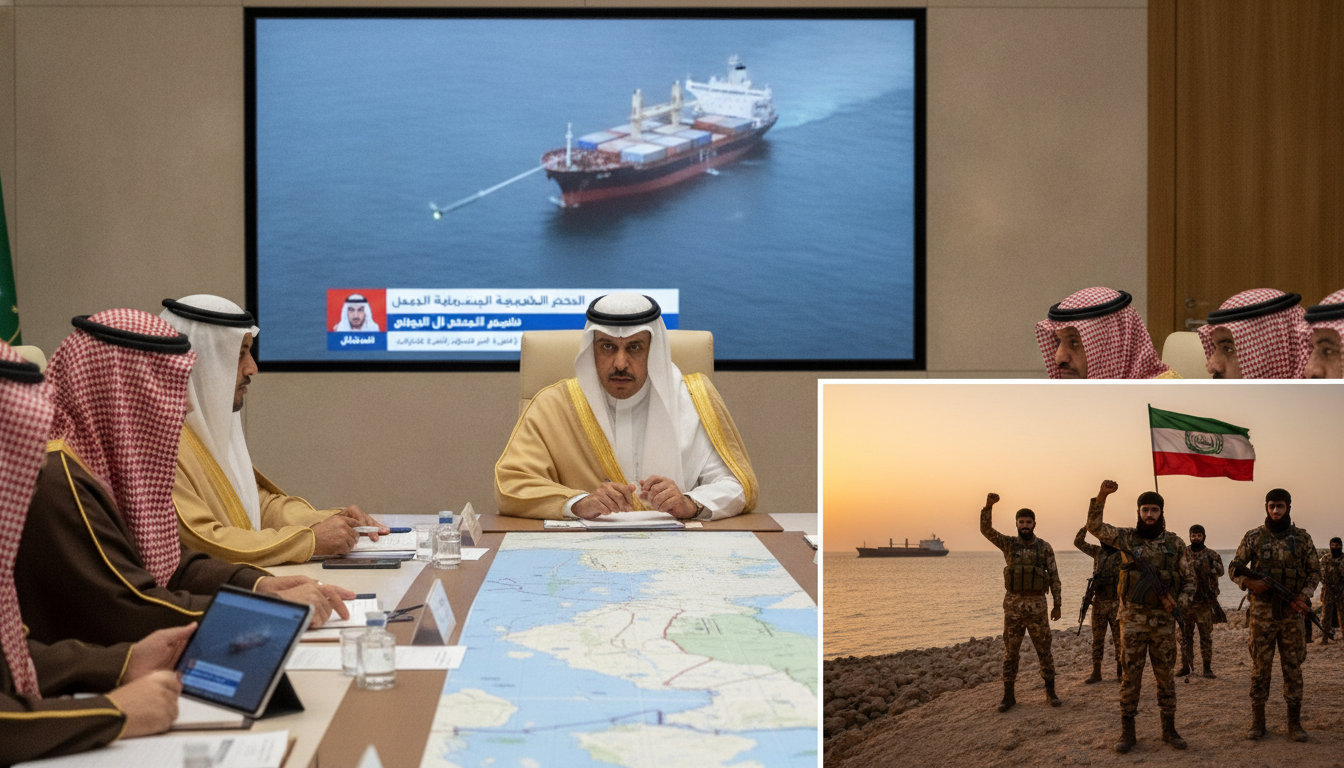
Houthis Block Saudi Shipping: Riyadh’s Strategic Patience Faces a Test in the Red Sea
Houthis block Saudi shipping has become the focal phrase of a new regional standoff as Sana’a’s militants declared intent to interdict vessels bound for Saudi ports in the Red Sea, prompting a forceful Saudi response. The move escalates a campaign of maritime coercion that Riyadh and its partners view as part of a broader Iranian effort to exert pressure through proxies. Analysts say the situation tests Saudi Arabia’s willingness to trade prolonged restraint for decisive action to protect its economy and supply routes.
Houthi Threat Targets Saudi Shipping
The Houthi announcement to block Saudi shipping in the Red Sea is a direct threat to one of the kingdom’s principal maritime approaches. The group’s operations have increasingly included missiles, drones and attacks on commercial vessels, aiming to raise the cost of free passage and disrupt trade.
Maritime security sources warn that even intermittent attacks can raise insurance premiums, reroute shipping lanes and create uncertainty for energy and goods exports. For Saudi Arabia, any sustained disruption would strike at the heart of its economic reforms and investor confidence.
Iran’s Proxy Strategy in Maritime Theatres
Observers interpret the Houthi campaign as part of Tehran’s broader strategy to apply pressure via regional proxies rather than direct confrontation. By threatening both the Strait of Hormuz and Bab al-Mandeb, Iranian-aligned actors can campaign asymmetrically across key chokepoints.
The objective appears to be disruption rather than decisive military defeat: undermining confidence in regional security, elevating logistical costs, and signaling political leverage. Such tactics allow Iran to exert influence while avoiding full-scale war against better-equipped opponents.
Saudi Strike on Sana’a Airport and Its Objectives
Riyadh’s recent strike on Sana’a International Airport signalled an attempt to sever a potential logistical corridor between Tehran and Houthi-controlled areas. Saudi officials framed the action as aimed at preventing the establishment of a sustained air bridge that could move personnel, advisors and advanced systems into Yemen.
The strike was calculated to deny a permanent infrastructure base rather than to escalate for its own sake. Saudi statements and regional diplomatic activity indicate the kingdom seeks to contain the threat while preserving options for both deterrence and de-escalation.
Evolution of the Saudi-led Joint Forces Command
Military analysts note that the Saudi-led Joint Forces Command (JFC) has evolved significantly since operations in Yemen began over a decade ago. The current structure integrates personnel from Saudi and allied contingents within a unified operational framework, emphasizing joint intelligence, air power and precision effects.
That integration has produced faster decision loops between intelligence collection and strike execution, along with more coherent centralized escalation control. The JFC’s maturation changes calculations on the ground by complicating adversaries’ ability to operate with impunity across multiple domains.
Capabilities: Intelligence, Command and Precision Strike
Saudi advances in fused command-and-control, electronic warfare and precision targeting have enhanced its capacity to disrupt hostile networks rather than only striking individual launch systems. These capabilities aim to degrade the command, logistics and communications infrastructure that sustains proxy campaigns.
Sustained operations that focus on system-wide dismantling reduce the chance that adversaries can regenerate capabilities quickly. That operational depth is a central reason Riyadh has so far balanced restraint with targeted, high-value strikes.
Global Economic Stakes and Energy Security
A sustained campaign to interdict Saudi exports would have repercussions beyond the Middle East, touching global shipping, energy markets and inflation. Saudi Arabia remains one of the world’s largest crude exporters and a key supplier that global markets rely on for contingency supply and price stability.
Even the threat of disruption can ripple through insurance markets and shipping schedules, prompting broader economic consequences. Governments and commercial operators closely monitor such maritime risks because they affect supply chains, commodity prices and investor sentiment worldwide.
Escalation Risks and the Limits of Strategic Patience
The current trajectory raises a central strategic question: how long will Riyadh tolerate repeated economic coercion before concluding that restraint itself carries excessive cost? Saudi leadership has repeatedly prioritised stability and economic transformation, but sustained attacks on maritime lifelines challenge that calculus.
History demonstrates that prolonged pressure can alter a state’s cost–benefit analysis. If Iran persists in using the Houthis as an instrument of coercion, Saudi decision-makers may determine that decisive, system-targeted action is necessary to restore long-term security and protect core national interests.
Diplomacy, Deterrence and Regional Balance
Diplomatic efforts are likely to continue alongside military measures, with regional partners and international stakeholders pushing for both de-escalation and strengthened maritime security. At the same time, enhanced deterrent posture—built on integrated military capabilities and coalition planning—aims to raise the operational and political risks of further provocative acts.
The interplay of diplomacy, deterrence and targeted operations will shape whether the crisis remains episodic or expands into a more sustained confrontation with wider regional consequences. For now, Riyadh’s responses reflect a mix of calibrated force and broader strategic caution.
The situation in the Red Sea remains fluid, and the outcome will depend on whether diplomatic channels can reduce Iranian proxy pressure and whether the Houthis decide the costs of escalation outweigh any perceived gains. If coercive attacks continue, the kingdom’s decision-makers may move from prolonged patience to a campaign designed to dismantle the networks enabling maritime threats.
