
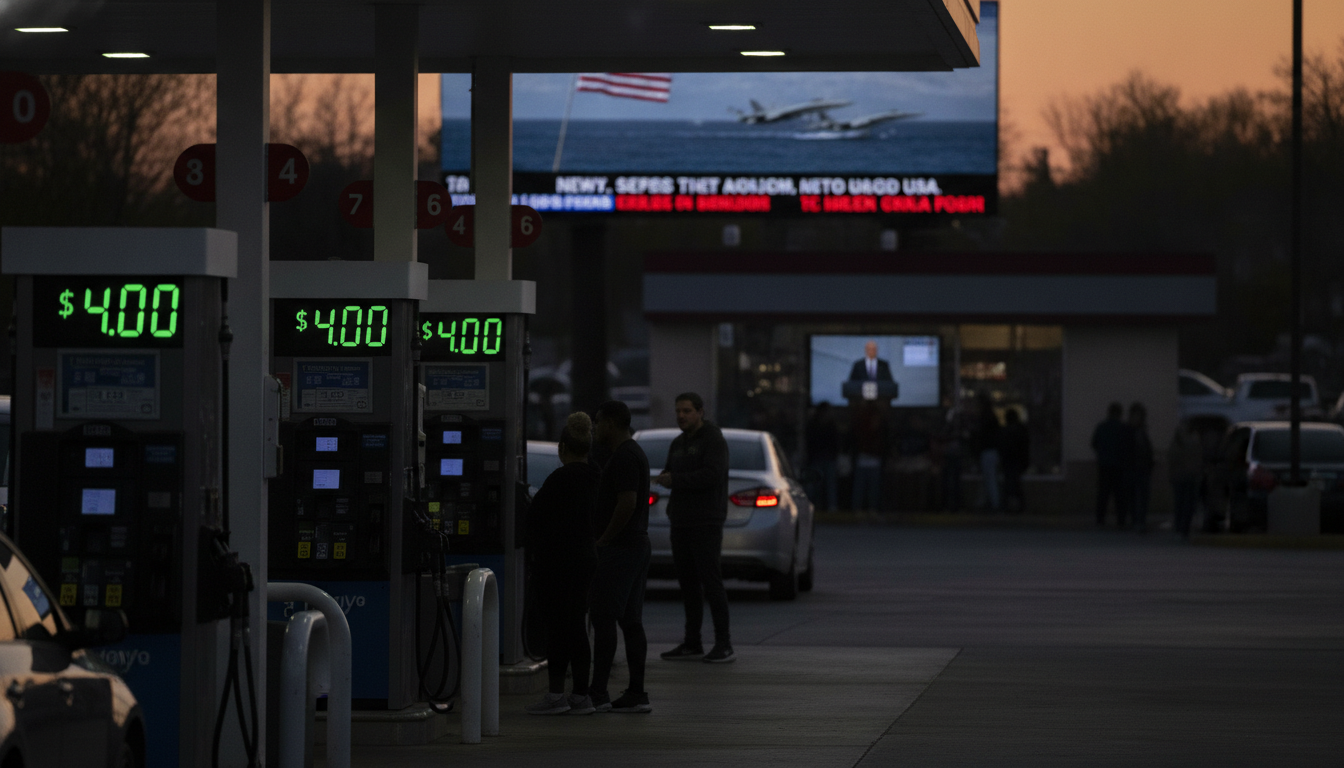
US petrol prices hit $4.00 per gallon amid US–Iran tensions and Houthi blockade
US petrol prices reach $4.00 per gallon as Brent and WTI climb amid US–Iran escalation and Houthi threats, tightening supply and squeezing motorists and markets.
The average price of petrol in the United States climbed to $4.00 per gallon on Monday, marking a second consecutive week of increases and adding pressure on American consumers at the pump. Rising crude benchmarks and renewed geopolitical tensions in the Middle East — including a Houthi-declared naval blockade and escalating US–Iran friction — are cited by analysts as the principal drivers behind the move in US petrol prices.
Brent and WTI benchmarks shifted higher this week
Brent crude touched $91.42 per barrel on Sunday before easing back to roughly $88.04 in early trading on Monday, reflecting volatile sentiment among traders. US West Texas Intermediate briefly reached $85.39, its highest since mid-June, then retreated to about $82.29 as markets reacted to mixed flows of tankers and shifting risk assessments.
Oil traders said the swings reflect a market balancing immediate supply concerns against short-term demand signals, with price moves amplified by tanker traffic disruptions and investor caution over broader economic data. Those benchmark changes have a direct pass-through effect to refined fuel markets in the US, contributing to rising petrol pump prices.
Geopolitical flare-ups heighten supply worries
The uptick in energy prices follows a deterioration in US–Iran relations and threats from Iran-aligned groups, notably Houthi fighters in Yemen, who announced measures affecting shipping routes. Officials and regional observers warn that any sustained campaign targeting tanker traffic or energy infrastructure could tighten global crude flows and lift fuel costs further.
Pressure on Houthi allies to close or disrupt key routes such as the Red Sea has compounded concerns, with market participants increasingly focused on the security of chokepoints that channel a significant share of global oil shipments. Analysts say even intermittent attacks or threats can lead shippers to reroute or delay sailings, adding time and cost to the oil supply chain.
Strait of Hormuz vessel traffic fell sharply
Shipping data firms reported a notable decline in transits through the Strait of Hormuz during the latest measured period, with just 30 vessels passing between July 17 and 19. Weekend counts fell further, with one dataset recording eight ship transits on Saturday and four on Sunday, underscoring a sharp contraction in traffic through a strategically vital corridor.
Owners and insurers are recalculating risk premiums for tankers navigating the region after incidents that included projectiles striking two vessels belonging to Greece’s Dynacom Tankers near the Omani coast. The company confirmed the strikes but did not attribute responsibility, and maritime operators said such episodes increase the cost and complexity of moving crude and refined products.
American motorists feel the impact at the pump
The American Automobile Association’s daily price tracker shows the national average rising from $3.87 per gallon a week earlier to $4.00, a trend that reverses a brief period of easing reported in recent consumer inflation data. Last week’s U.S. Bureau of Labor Statistics Consumer Price Index showed headline consumer inflation eased partly because petrol prices had fallen in the month prior, but analysts warn the reprieve may be short-lived if geopolitical strains persist.
For many households, higher petrol costs add to budgetary strain even as other parts of the inflation basket moderate, prompting concern among consumer advocates and policymakers about the cost-of-living trajectory heading into the autumn. Regional variations mean drivers in some states already face substantially higher pump prices than the national average.
Financial markets reacted to mixed forces
Equity markets displayed a mixed response to the energy-driven risk premium and a separate rally in parts of the technology sector. The Nasdaq rose about 0.6 percent midday, supported by gains in chipmakers and AI-related names, while the S&P 500 ticked up roughly 0.2 percent and the Dow Jones Industrial Average edged down around 0.25 percent from its opening level.
Safe-haven flows were uneven: spot gold slipped marginally to roughly $4,011.96 per ounce in midday trade, while Treasury yields moved higher and the US dollar gained modest ground. “Higher energy prices remain in focus as a re-escalation in the Middle East tensions adds to concerns that last week’s cooler-than-expected inflationary data may not be enough to deter the Fed from raising interest rates later this year,” said David Meger, director of metals trading at High Ridge Futures, in comments to Reuters.
Markets are now weighing the twin effects of tighter energy-related supply expectations and signs of resilient demand in parts of the global economy, with investors and policymakers watching incoming data for signals on potential interest-rate moves.
US petrol prices have edged up amid a volatile week of crude swings, reduced tanker transits through key waterways, and renewed geopolitical risk that may influence energy flows into the northern hemisphere. Continued monitoring of shipping patterns, regional security developments, and refinery outputs will be key to assessing whether pump prices stabilize or continue to climb in the weeks ahead.
