
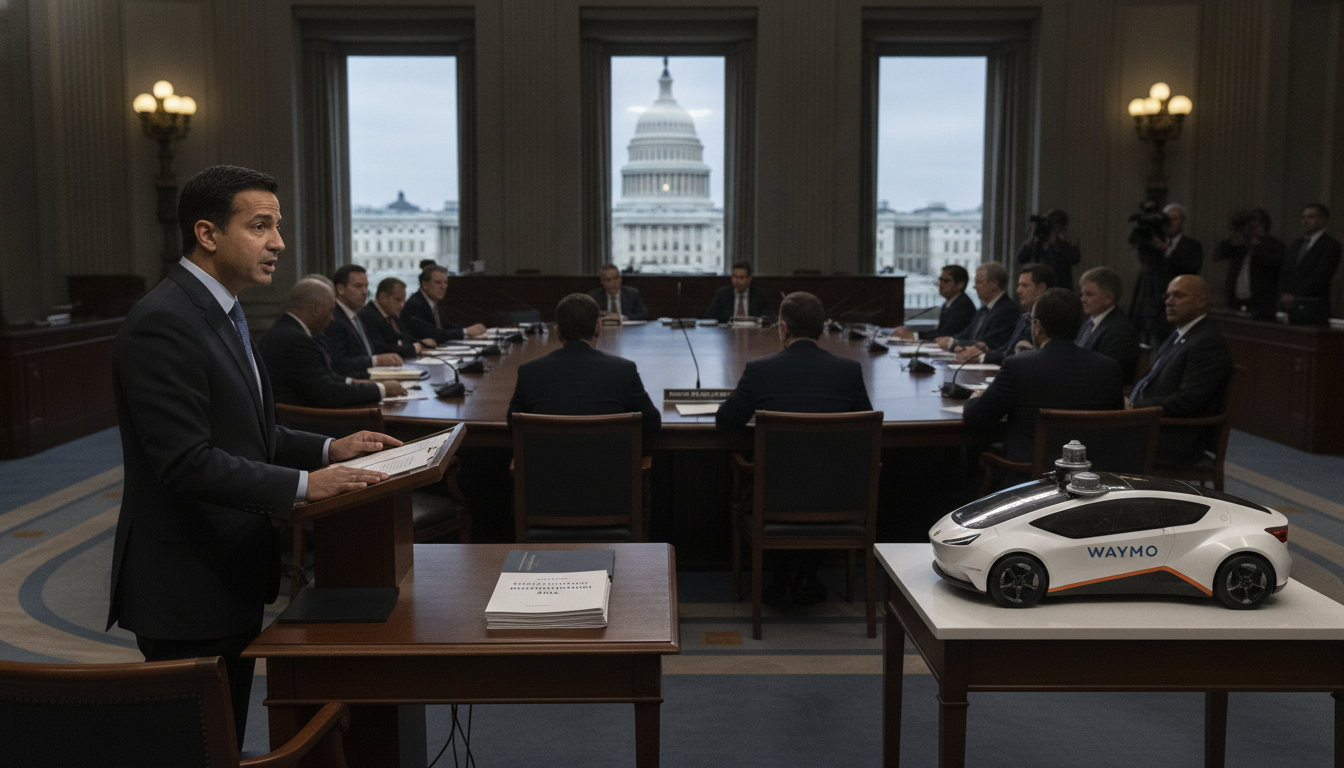
D.C. robotaxi bill pits Uber against Waymo as industry battles regulation
D.C. robotaxi bill debate intensifies as Uber opposes proposals it says favor Waymo, while Waymo supports the measure and other AV developers raise testing, fee and operational concerns.
Washington lawmakers opened hearings this week on a proposed D.C. robotaxi bill that would permit autonomous vehicles to operate in the city, exposing a sharp split between major mobility companies and other industry stakeholders. Uber has lobbied hard against the legislation, arguing the measure would displace for-hire human drivers and effectively hand Waymo a dominant market position. Waymo, which has already met many of the bill’s testing thresholds in the district, has signaled support for the rules as written, setting up a high-stakes policy clash.
D.C. Council hearing reveals stark industry divide
Representatives from Uber, Waymo, Lyft, Tesla and other companies testified before the D.C. Council alongside disability advocates, unions and safety groups. The hearing underscored conflicting views about how autonomous vehicles should be integrated with existing ride-hailing services and road safety priorities.
Several witnesses pressed regulators to prioritize accessibility and manage public safety risks, while company spokespeople emphasized different business models and operational needs. The testimony made clear that passage of the bill would reshape competitive dynamics in the city’s for-hire market.
Uber advocates a “hybrid” ride-hailing model
Uber’s submitted correspondence and public arguments push for a model that would require robotaxis to operate as part of ride-hailing networks alongside human drivers. Company officials told council members they fear a free-standing robotaxi program would displace thousands of for-hire drivers and create a de facto monopoly for large AV developers.
Insiders said the hybrid approach aims to protect driver jobs and preserve existing dispatch and payment systems, but several sources familiar with the deliberations doubt that requirement will survive intact in final legislation. If adopted, the plan could force AV firms into partnerships or concessions that change how their services are deployed and monetized.
Waymo’s advantage under testing and mileage thresholds
The bill includes strict prerequisites — including a 180-day testing period and a 250,000-mile benchmark — that several companies criticized as onerous. Waymo, which has operated with human safety operators in the district, already surpasses those thresholds and would likely enter the market with a significant head start if the measure passes as drafted.
That built-in lead has alarmed competitors and shaped much of the lobbying intensity, with smaller developers arguing the requirements favor incumbents and stifle competition. Lawmakers now face the task of balancing rigorous safety standards with fair market access.
Industry objections on fees, taxes and reciprocity
Tesla and other AV developers raised specific objections to the proposal’s financial and administrative provisions, including a $1 million application fee, a $5 million permit fee and a $0.15-per-mile tax. Several companies urged that testing miles accumulated in other jurisdictions be counted toward the proposed mileage requirement to avoid duplicative regulatory burdens.
Labor groups and safety advocates countered that higher fees and strict local testing would fund oversight and protect riders, particularly people with disabilities. The council will need to reconcile those competing priorities as it refines the bill language.
Major corporate moves add context to the debate
The regulatory fight comes as mobility companies are reshaping their global footprints and product strategies. Uber this month announced a blockbuster plan to acquire a large international delivery business for roughly $14.8 billion, a deal that would substantially expand its delivery operations across Europe, the Middle East, Latin America and Asia.
Investments and fundraising rounds elsewhere in the sector signal broad interest in transportation automation and logistics, with startups raising capital for inspection technology, wiring systems and low-speed electric vehicles. Those commercial developments heighten the stakes for how U.S. cities regulate emerging autonomous services.
Safety incidents and municipal pressure influence lawmakers
Recent incidents involving autonomous and semi-autonomous systems have added urgency to the council’s debate. City officials pointed to cases where robotaxis stalled or were impeded during extraordinary events and to safety agency findings involving driver behavior and vehicle controls.
San Francisco leaders and other city officials have publicly called for tougher operational requirements after mobility deployments created local disruptions, and those concerns have animated parts of the D.C. hearing. Regulators are weighing whether stricter reliability and contingency rules are needed to prevent service failures from cascading into broader traffic and safety problems.
Final decisions in the D.C. Council will carry implications beyond the district, as other cities and states consider similar frameworks for integrating autonomous vehicles into public streets. Lawmakers must balance public-safety mandates, labor impacts and competitive fairness while technology firms and unions continue to press their opposing visions for how robotaxis should serve cities and riders.
