
Vikram-1: Skyroot’s Private Orbital Rocket Reaches Low Earth Orbit in Landmark Test
Skyroot’s Vikram-1 succeeds in India’s first private orbital launch, placing customer payloads into 450 km orbit and signalling a new phase for the nation’s space industry.
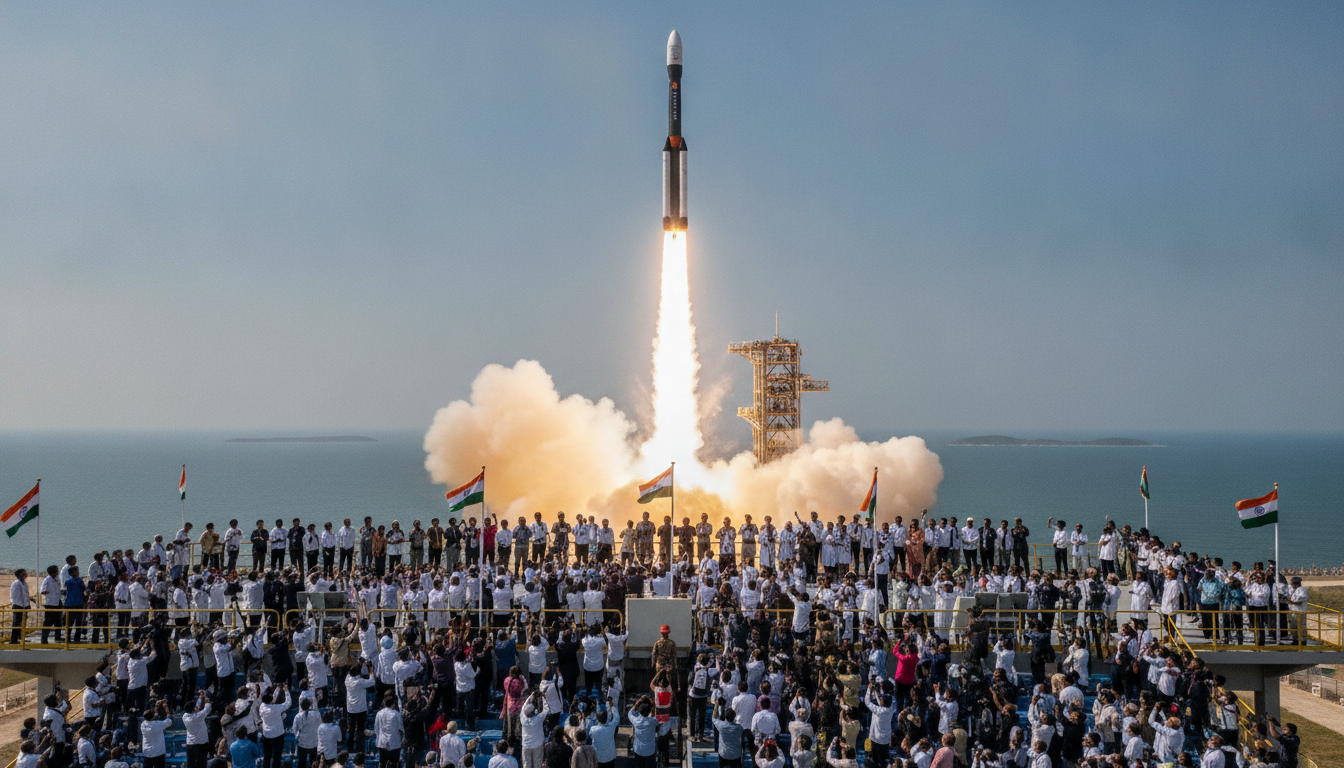
India’s privately built Vikram-1 rocket achieved orbit on July 18, 2026, in a test launch that placed customer payloads into a 450 km low-Earth orbit. The successful flight of Skyroot Aerospace’s three-stage, 22-metre vehicle marks a major milestone for the private sector and was hailed by Prime Minister Narendra Modi as an inspiration for young innovators.
Launch outcome and official reaction
The Vikram-1 completed the mission profile by deploying multiple customer payloads and validating key flight systems, Skyroot said following the launch from the Satish Dhawan Space Centre in Sriharikota. Prime Minister Modi praised the achievement as one that will “encourage countless youngsters to dream bigger and innovate fearlessly,” underscoring the political significance attached to the flight.
Skyroot described the test as confirmation of the rocket’s propulsion, avionics, telemetry, guidance, navigation and control subsystems under real flight conditions. Company statements and images from the site showed the vehicle ascending cleanly and separating through its planned stages to reach the intended 450 km orbit.
Payload manifest and technology aboard
Vikram-1 carried a mix of commercial customer satellites plus experimental items intended to demonstrate mission versatility. The manifest included small commercial payloads, experimental equipment, a lab-grown diamond and a miniature 18-carat gold sculpture commemorating India’s national space effort.
The vehicle is rated to carry up to 350 kg to low-Earth orbit and is fitted with systems designed to mitigate orbital debris, including robotic arms capable of removing small objects. Those features reflect a growing focus on end-to-end commercial services, from launch to post-mission cleanup.
Skyroot’s development and the Vikram family
Skyroot Aerospace, founded in 2018, has risen quickly in India’s liberalized space market and drew international investment as it progressed through development tests. The company achieved a valuation of $1 billion earlier this year, becoming one of the nation’s first space startups to reach so-called unicorn status.
Vikram-1 builds on earlier flights in the Vikram series, notably the suborbital Vikram-S mission in 2022 that reached space without placing payloads into orbit. Engineers said lessons from that test informed design and operational changes implemented on Vikram-1.
Next steps and commercial ambitions
Skyroot said further test flights will precede the start of routine commercial missions, with the company aiming to offer regular rides to orbit for small-satellite operators. The success positions Skyroot to compete for business that previously relied on national programmes or international launch providers.
Analysts expect a period of cadence-building, where the company must demonstrate reliability, turn-key services and competitive pricing to win repeat customers. Routine commercial operations will also require continued coordination with national regulators and ground infrastructure providers.
Impact on India’s space ecosystem
The Vikram-1 flight highlights the rapid expansion of India’s private space sector following government reforms that opened the market to non-state actors. The achievement complements India’s public space milestones, including record multi-satellite launches and recent lunar exploration successes.
Observers say the coupling of public and private capabilities could lower costs, spur innovation and create new downstream services such as Earth observation and communications. That shift may also attract further foreign investment into India’s space startups and manufacturing base.
Regional and global implications
The successful orbital launch by a private Indian firm adds momentum to a changing global launch landscape dominated increasingly by commercial players. Skyroot’s flight was framed domestically as a step that places India among a small group of nations in which private companies have demonstrably reached orbit.
For international customers, the emergence of a new reliable launch provider in India could diversify options and shorten wait times for small-satellite deployment. It also raises questions about competition, export controls and international partnerships as private firms expand cross-border services.
The Vikram-1 mission represents a technical and commercial breakthrough for Skyroot and a symbolic advance for India’s private space industry, offering a tangible example of how regulatory reform and entrepreneurship can alter a national capability.
