
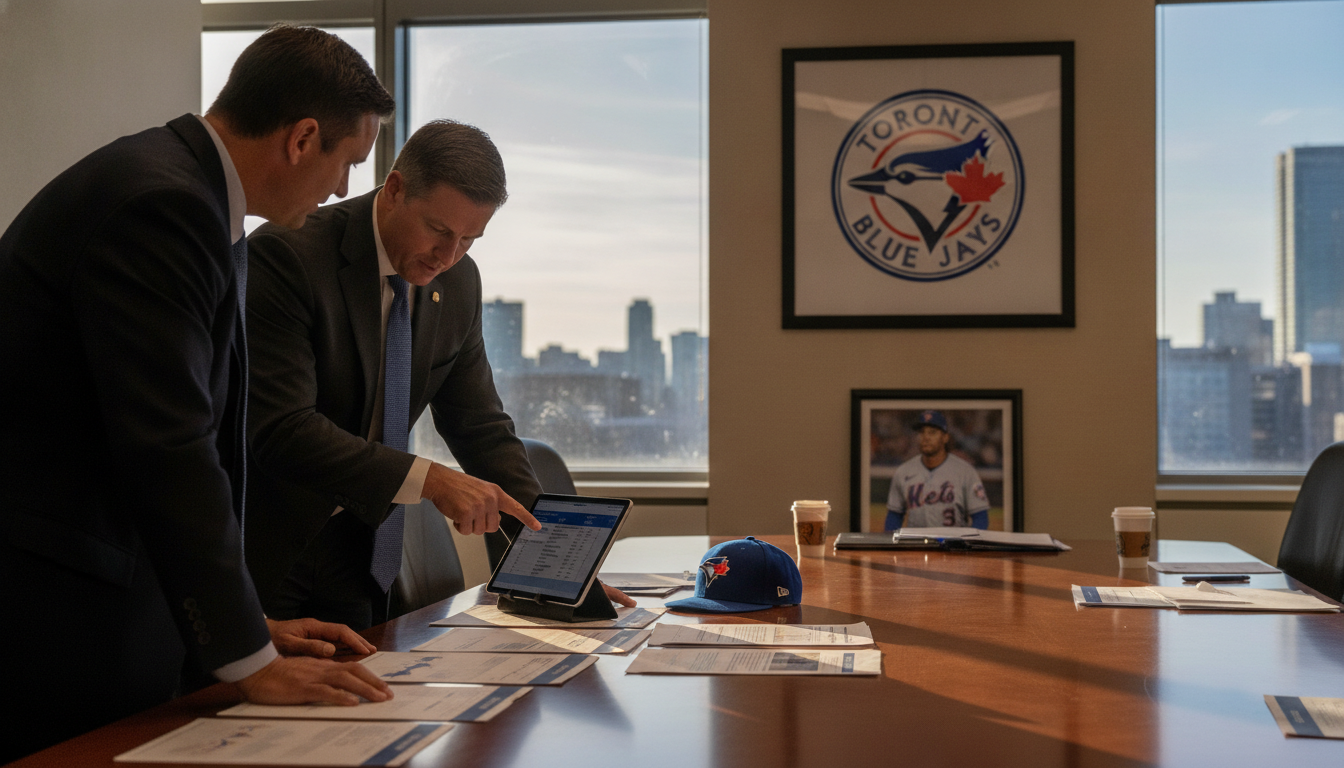
Do the Blue Jays Have Enough to Pry Francisco Lindor from the Mets?
Blue Jays, Lindor: can Toronto assemble the prospects, salary flexibility and trade pieces needed to land Francisco Lindor before the Aug. 3, 2026 trade deadline?
The New York Mets have signaled they will be sellers at the 2026 trade deadline, and reports this week put Francisco Lindor among the players the club is at least willing to discuss moving. (mlb.com)
Mets’ trade posture and Lindor’s contract
The Mets’ decision to shift toward selling comes after a disappointing first half and a front office assessment that rebuilding through trades could accelerate their path back to contention. (mlb.com)
That reality does not remove major barriers to a Lindor trade: he is under a long-term pact through 2031 with an annual average value reported in media coverage as roughly $32 million, and he holds full no-trade protection. Those contract details — plus Lindor’s reluctance to publicly discuss waiving his clause — make any midseason deal complicated. (mlb.com)
What Toronto would likely need to offer
Acquiring a player of Lindor’s pedigree would still require a premium return even if the Mets were willing to eat salary. Any realistic package would have to combine high-end, near-MLB-ready talent and top prospect capital rather than a single veteran add. Industry evaluators continue to rank the Blue Jays’ farm system as improved but still developing, with players such as Arjun Nimmala and Ricky Tiedemann among the most valuable trade chips. (mlb.com)
Sources close to typical Deadline negotiations say teams in the Mets’ position commonly demand multiple blue-chip prospects or a young big-league starter plus two high-end prospects for a controllable or semi-controllable everyday player. That raises a hard question for Toronto: whether the front office would surrender premium future assets for a veteran whose contract and no-trade protections reduce flexibility. (mlb.com)
Payroll and roster constraints for Toronto
Toronto enters the Deadline with a heavy payroll footprint. Vladimir Guerrero Jr.’s 14‑year, $500 million extension that begins this season and a roster populated with several high-payroll veterans limit the club’s immediate financial wiggle room. Those long-term commitments make it harder for the Blue Jays to absorb another large guaranteed contract without offsetting moves. (apnews.com)
Blue Jays executives have publicly said they will approach the Deadline prepared to buy or sell depending on July results, but internal payroll realities and the team’s desire to protect a competitive window weigh in favor of surgical upgrades rather than blockbuster, balance-sheet-altering trades. (mlb.com)
On-field fit and clubhouse considerations
If Toronto were to pursue Lindor, the club would need to reconcile positional alignment and playing time at shortstop and third base, and evaluate defensive profiles, base-running value and clubhouse chemistry. Lindor’s recent injury history and a mixed first half in 2026 complicate the evaluation but do not erase his track record as an elite run producer and defender over prior seasons. (mlb.com)
Beyond on-field fit, the Blue Jays would have to weigh the signaling effect of trading for a veteran with a no-trade clause: such moves often require a clear long-term plan, either an extension discussion or a retooling that aligns payroll and prospect timelines. Toronto’s front office has shown a willingness to spend for contention, but it has also emphasized protecting the club’s prospect pipeline. (si.com)
Possible trade structures and the most likely outcomes
Short of Lindor waiving some or all of his no-trade protection, the Mets would likely seek a multi-layered return: a near-ready major-league contributor, two top-30 type prospects, and possibly cash or contract relief to make the math work. Teams with both top prospects and financial flexibility would be best positioned to make such an offer. (mlb.com)
Given the complexity, the most likely midseason scenarios are limited: the Mets trade lower-tier veterans and relievers to restock the farm; they test market interest in Lindor without consummating a deal; or they reach a late-summer agreement only if Lindor signals willingness to approve a move. Media coverage this week characterizes a Lindor swap as “very unlikely” even as the Mets open conversations. (mlb.com)
The Aug. 3 trade deadline remains the definitive marker for action. General managers will have little time after the All‑Star break to assemble competitive offers, and teams that want Lindor will need to balance present gains against long-term cost. (mlb.com)
In short, the Blue Jays possess improving prospect assets and the financial wherewithal to pursue premium players, but any realistic path to acquiring Francisco Lindor this summer would require Toronto to part with top-end prospects or to convince the Mets to eat significant salary — and Lindor himself would almost certainly have to waive at least some of his no‑trade protection. The combination of contractual, financial and roster hurdles makes a Lindor-to-Toronto blockbuster possible in theory but unlikely in practice ahead of the Aug. 3, 2026 Deadline.
