
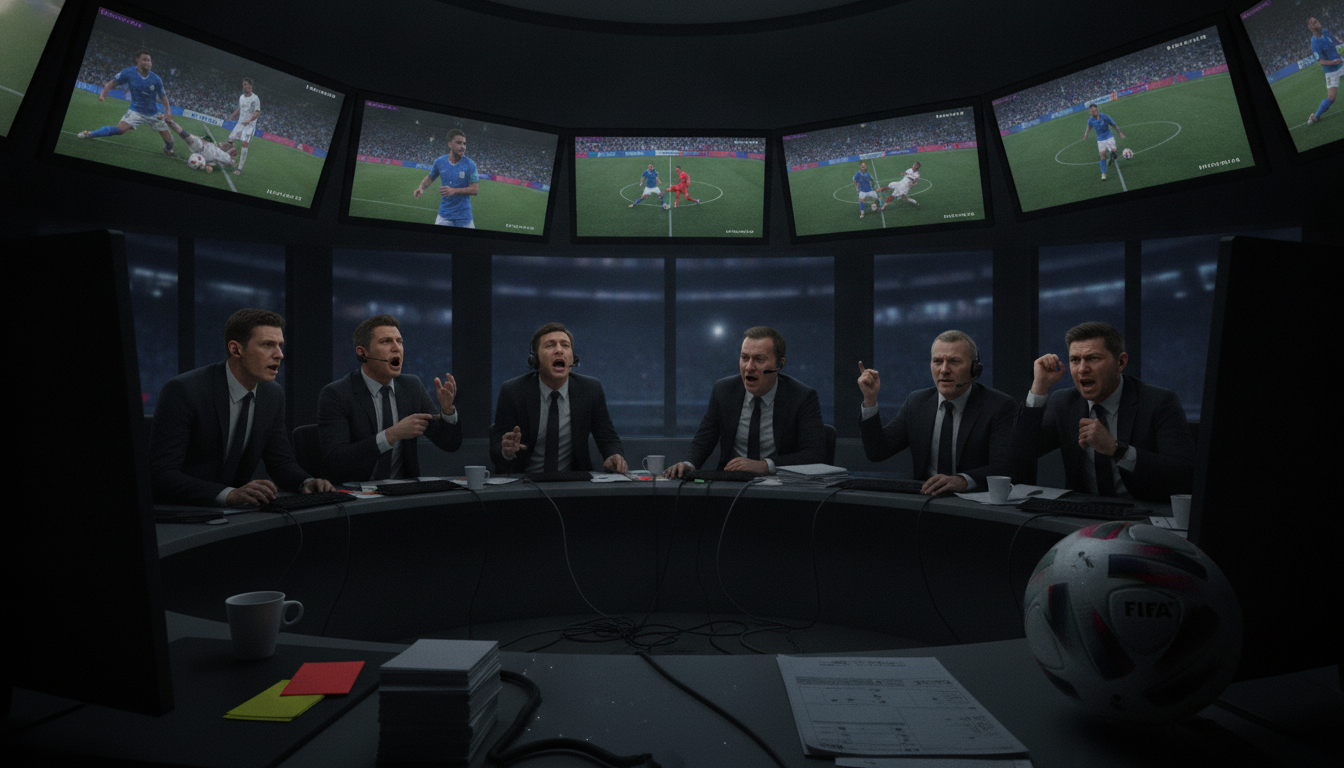
World Cup refereeing controversies shadow quarterfinals as VAR decisions shape outcomes
Controversial World Cup refereeing and VAR calls dominated quarterfinals as England advanced, Switzerland were reduced to ten, and technology faced fresh scrutiny.
The quarterfinal day of the World Cup was defined as much by refereeing and VAR interventions as by goals and tactics, with several high-profile decisions altering match outcomes. England reached the semifinals after a contentious VAR-assisted sequence, while Switzerland’s campaign ended following a reversed booking and a simulation call that produced a red card. The tournament’s officiating and new video-review rules are now central to post-match debate.
England advance after VAR-reviewed goal
England beat Norway 2-1 to reach the semifinals, with Jude Bellingham again at the center of the result by scoring a brace that kept his side moving forward. The match featured a controversial sequence in which a goal ultimately stood despite questions about interference from stadium equipment, and VAR was heavily involved in confirming and reviewing the play. Manager Thomas Tuchel expressed satisfaction with the result but was publicly critical of his team’s performance, underlining a divide between outcome and on-field execution.
Tuchel critical despite progression
Tuchel emphasized that, while progression to the final four is the objective, the manner of the victory left him unsatisfied and concerned about technical lapses. Players and staff pointed to the team’s adaptability and impact substitutes as reasons the side scraped across the line in a physically tough contest. Jude Bellingham’s second straight knockout brace and defensive contributions from late changes helped preserve the lead. The manager’s insistence on higher standards sets the tone for scrutiny as England prepares for tougher tests ahead.
Switzerland knocked out after controversial second yellow
Switzerland appeared to seize momentum when Dan Ndoye equalized in the 67th minute, but the match swung dramatically when Breel Embolo was shown a second yellow card and sent off. The booking followed a VAR review that applied a new “mistaken identity” correction, transferring an initial yellow from Argentina’s Leandro Paredes to Embolo and then concluding the play was simulation. Playmakers and coaches immediately debated whether simulation warranted a second booking in that context, and Switzerland were forced to defend through extra time with ten men.
VAR and new rules under scrutiny
The Embolo decision highlighted a broader tournament trend in which World Cup refereeing and the expanded remit of VAR are shaping headlines as often as goals. Officials used an updated mechanism to reverse or transfer bookings, a process designed to remedy on-field errors but one that is now drawing contestation over consistency and proportionality. Across the knockout rounds, several high-stakes VAR interventions — including overturns, non-calls and technological reviews — have prompted questions about transparency, timing and the balance between human judgment and video evidence.
Technology glitch alters England’s goal and reignites debate
A separate, striking episode involved a goal that progressed England’s attack after a loose ball landed in play following an apparent contact with stadium equipment during a goal kick. By rule the goal should have been nullified if an external object interfered, yet the sequence stood and led to Bellingham’s opening strike. That outcome renewed concerns about the reliability and calibration of novel technologies being used this tournament, and observers compared the incident to earlier, disputed sensor-based decisions in prior rounds. Teams, pundits and federation officials are now expected to press for clarity on how equipment and automated systems are monitored and adjudicated.
Standout performers and the bigger picture
Individual performances continued to shine amid the controversy, with Bellingham’s consistent influence anchoring England’s progression and Argentina’s goalkeeper serving as a stabilizing force in a tense encounter. Lionel Messi generated key chances and provided an assist despite a relative scarcity of finishes, demonstrating his continued creative impact. The quarterfinals also produced a notable statistical milestone: the four semifinalists at this stage include the highest-ranked teams in FIFA’s list, a point that underscores how quality and depth are prevailing even as officiating debates dominate conversation.
The refereeing and VAR issues that surfaced on quarterfinal day have shifted some focus away from players and tactics toward governance and procedure, creating a new narrative thread for the closing stages of the tournament. As teams and fans digest the outcomes, governing bodies will likely face renewed calls for clearer guidelines, greater consistency and improved transparency in video review and technological implementation. The coming semifinal fixtures will therefore be contested not only on the pitch, but under intense scrutiny of the systems and officials charged with deciding football’s most consequential moments.
